Role of Distributors in the Industrial Chemicals Market

Outstanding China Chemical Vendors: Reliability and Quality

Did you know that China commands the international chemical sector, manufacturing in excess of 40% of the world’s industrial chemicals? This preeminence underscores the magnitude and importance of the Chinese chemical sector. It further underlines the importance of choosing the appropriate collaborators within China chemical suppliers.

Within the rapid realm of production and chemical manufacturing, the reliability of your supplier is key. It may significantly impact your product’s quality and performance. Enterprises like Tianjin Chengyi International Trading Co. stand out as reliable suppliers in China. They ensure high-quality standards across various industrial applications. We will examine what differentiates premier China chemical vendors, highlighting standards and trustworthiness as the core of strong alliances.

Essential Insights

  • China’s chemical market leadership presents extensive benefits for companies around the world.
  • Choosing reliable chemical suppliers in China is vital for maintaining product quality and performance.
  • Companies like Tianjin Chengyi International Trading Co. highlight the importance of quality assurance in chemical supply.
  • The extensive output of Chinese industrial chemicals influences sectors from production to medicine.
  • Understanding quality standards is critical for navigating the China chemical suppliers landscape.

China chemical suppliers

The Role of Excellence in China’s Chemical Vendors

The role of quality in China’s chemical suppliers is critical. Leading chemical companies in China adhere to rigorous benchmarks. They conform to international and domestic rules. They establish confidence and consistency, ensuring vendors stay ahead and satisfy customers.

Certifications such as ISO 9001 play a major role. They assess chemical product excellence. Such accreditations are vital to inspect production methods.

Deciphering Compliance Benchmarks

QA in China underpins the entire supply chain’s soundness. Suppliers get many certifications to ensure product excellence. Implementing these criteria produces reliability, security, and regulatory adherence in fabrication.

Such approvals further enhance trust among international buyers. They show a commitment to high-quality industrial chemicals.

Effect of Excellence on Sector Uses

The quality of industrial chemicals from Chinese companies affects many industries. For instance in medicine, crop production, and industrial assembly. High-quality materials improve safety and productivity, vital in exacting and dependable industries.

In pharmaceuticals, poor-quality chemicals can harm drug effectiveness. In the agricultural sector, top-grade supplies affect yield volumes. Prioritizing standards is critical for corporate triumph internationally.

Snapshot of the Chinese Chemical Market

The China chemical industry is a key player globally, marked by notable growth trends that influence the economy. As the foremost global chemicals maker, China possesses a major stake in production. It is recognized as a critical center for chemical manufacturers in China. The field has advanced markedly, with rising demand for creative manufacturing and uses.

Development Trends in Chemical Manufacturing

Over the last few years, this industry has grown swiftly. City growth, tech advancements, and rising eco-consciousness fuelled this rise. Firms today emphasize eco-friendly practices, complying globally and improving output. Investments in research and development also uncover new materials and processes, fueling market growth.

Industry Scale and Financial Influence

The size of the China chemical industry’s market highlights its substantial contribution to the national economy. It supports the economy and provides millions of roles within multiple divisions. The economic influence of China’s chemical industry suppliers extends beyond national borders, shaping global trade. With ongoing innovation and market adaptation, this industry remains a vital part of China’s economic structure.

Types of Chemicals Offered by Leading Suppliers

The Chinese chemical market offers a vast array of materials, categorized into several types of chemicals. Understanding these groupings is crucial for sourcing top Chinese vendors. It’s critical for companies reliant on superior chemical products. Below we compare inorganic and organic chemicals alongside specialty and bulk variants. These divisions fulfill certain market needs.

Comparing Inorganic and Organic Chemicals

Inorganic chemicals comprise metals, salts, and minerals without carbon-hydrogen bonds. They play vital roles in production, farming, and building. In contrast, organic chemicals, being carbon-based, include fuels, solvents, and plastics. Both categories boast distinct applications in diverse industries, influencing buying plans.

Advanced vs. Commodity Chemicals

Specialty compounds are designed for targeted applications, exhibiting bespoke traits. They frequently appear in drug production, beauty products, and electronic devices. Bulk chemicals, on the other hand, are produced in large quantities. They support a range of functions like fertilizer production and core industrial processes. Understanding the right types of chemicals for your needs is key to effective sourcing.

Leading China Chemical Suppliers

The Chinese chemical market is flourishing, driven by various firms operating locally and internationally. Top suppliers in China have built strong reputations through quality and reliability. Companies like Tianjin Chengyi International Trading Co. are known for excellent customer service and a wide range of products. They satisfy multiple sector demands.

Major Industry Participants

Various veteran enterprises spearhead this contested field. Enterprises like Sinopec and BASF possess international fame for wide-ranging products and forward-thinking approaches. These premier providers occupy hefty market segments, setting benchmarks in excellence and performance. They channel funds into R&D, pioneering with everything from standard chemicals to intricate blends.

Innovations and New Entrants

Fresh entrants likewise reshape the sector panorama. These innovative companies bring fresh ideas and solutions, increasing competition among top suppliers. They concentrate on advanced innovations, eco-friendly processes, and customized offerings for distinction. This dynamic environment keeps Chinese chemical companies’ offerings evolving, benefiting consumers and industries that depend on these materials.

Quality Assurance Measures in Chinese Chemical Companies

QA lies at the heart of China’s chemical enterprises. They implement strict measures to ensure products adhere to international safety and compliance standards. Dependable China chemical providers usually carry ISO accreditations, acting as universal excellence indicators. These approvals demonstrate pursuit of top quality, raising trust among worldwide purchasers.

Regular checks are essential for upholding product wholeness. Periodic QC inspections uncover and correct issues before distribution. This strategy defends end-users and maintains producers’ renown. Quality control protocols include:

  • Raw material assessments
  • Mid-production analysis
  • End-of-line validations

Creating a culture of quality within the organization is key. Employees must grasp the significance of quality assurance and embody it in their work. Instructional sessions are necessary to bolster this emphasis, securing premium benchmarks for dependable vendors.

These QC procedures are essential for nurturing long-term customer bonds internationally. They help producers preserve their reputations in the cutthroat chemical market.

Locating Dependable China Chemical Providers

Identifying dependable providers in China is key for companies seeking chemical supplies. It’s not just about the price. Various elements count to verify provider trustworthiness. Reviewing sector credibility, user testimonials, and chain visibility provides critical data.

Essential Aspects to Review

While vetting dependable chemical providers, some factors stand out:

  • Industry Reputation: Their market image indicates dependability and excellence.
  • Buyer Reviews: Favourable reviews from previous purchasers reveal vendor competence.
  • Chain Openness: Knowing the supply chain can reveal risks in sourcing.
  • Communication Speed: Quick communication shows a supplier’s dedication to customer service.
  • Expert Assistance: Provision of specialist help enhances the alliance through know-how sharing.

Accreditations and Regulatory Adherence

Certifications are critical in verifying a supplier’s commitment to quality. While assessing chemical vendors, look at the following accreditations and rules:

Certification Description
ISO 9001 Quality management system ensuring consistent product quality.
REACH Registration, Evaluation, Authorization, and Restriction of Chemicals compliance in the EU.
RoHS Restriction of Hazardous Substances compliance for electronic components.
OSHA Compliance Ensures safe and healthful working conditions in the workplace.

These certifications confirm suppliers adhere to high standards of safety, environmental protection, and operational quality. Reviewing concrete accreditations helps pinpoint trustworthy vendors focused on adherence.

Procurement of Industrial Chemicals from China

Understanding the local market and trade regulations is key to sourcing industrial chemicals within China. Numerous firms team up with sourcing intermediaries for professional insight. These agents have local knowledge and connections with reliable suppliers. This makes the procurement process easier for companies new to the Chinese market.

Engaging China-Based Sourcing Specialists

China-based procurement intermediaries play a key role in QA and punctual supply. They act as a bridge between buyers and producers, handle pricing, and conduct quality checks. By engaging a sourcing agent, companies can save time and reduce risks. Their expertise spots reliable vendors, raising deal outcomes.

Managing Chinese Import Rules

Customs and trade policies play key roles in China sourcing. It’s essential to grasp tariffs, safety standards, and compliance requirements. Companies must ensure their imports comply with local regulations to avoid delays and fines. Buying intermediaries give critical advice on these elaborate norms for hassle-free sourcing.

Ultimately, companies procuring industrial compounds from China gain from teaming with expert sourcing intermediaries. Those intermediaries assist in trade conformity and vendor trustworthiness. This method smooths procurement, enhancing overall purchase productivity.

Best Practices for Partnering with Chemical Manufacturers in China

Establishing fruitful collaborations with dependable chemical producers in China matters for enterprises desiring top-notch substances. Effective dialogue is the foundation of such partnerships. Precisely defining demands and aims can initiate a strong collaboration. Ongoing communication and meetings nurture trust and resolve challenges swiftly.

Contract negotiations are also critical for smooth operations. Parties need consensus on pivotal aspects such as cost, timing, and benchmarks. A well-crafted contract helps avoid misunderstandings and establishes clear accountability.

Lasting bonds with chemical suppliers secure uniformity and dependability. Building rapport enables firms to gain favorable deals and access updates on innovations. Engaging in collaborative efforts like audits or factory tours cements these alliances.

To prosper, firms ought to keep agile and unbiased. The chemical industry is constantly evolving, and adapting to these changes can improve partnerships. A forward-thinking attitude fosters winning partnerships with China’s chemical makers.

Challenges Faced by China Chemical Suppliers

The Chinese chemical procurement field encounters numerous hurdles. Compliance barriers loom large, forcing vendors to meet tougher eco and health mandates. These stipulations often lead to fabrication slowdowns and elevated overheads, reducing supplier effectiveness.

Regulatory Challenges

Adhering to national and international regulations is a significant challenge for Chinese chemical suppliers. Eco regulations, customs limits, and health requirements compel vendors to frequently revise their operations. This drive for adherence frequently calls for hefty investments, burdening funds.

Final Thoughts

Distribution disturbances equally challenge Chinese chemical providers. Worldwide tensions and outbreaks amplify these concerns, resulting in holdups and increased charges. Utilizing tactics such as expanding vendor bases and adopting tech solutions can reduce these disturbances. This ensures a more stable operational framework.

Conclusion

Selecting premier Chinese chemical vendors is vital for standards and uniformity in industrial compounds. This overview covered the extensive array of chemical products. It also highlighted how reliable suppliers in China, like Tianjin Chengyi International Trading Co., help businesses succeed.

Standards verification and approvals are essential in choosing collaborators. With sector growth, demand for trustworthy vendors will rise. Enterprises should develop firm alliances with renowned makers. That enhances performance and underpins long-term expansion.

Firms may gain from targeted procurement and market insight into China’s chemicals sector. Adopting best practices prepares them for challenges and opportunities in the dynamic industrial chemicals sector.

Common Mistakes When Working with Herringbone Selvedge Denim Fabric

Selvedge Denim Material: What You Need to Know

A single pair of vintage Levi’s 501s from the 1940s recently sold for $87,400 at auction. Why were these trousers valued higher than a high-end automobile? It all comes down to their selvedge denim fabrication.

This high-end denim stands for more than simple material. It transports us back to when James Dean sported his 501s in Rebel Without a Cause, and Marlon Brando set the standard for cool in The Wild One. Those pop culture legends weren’t merely clad in denim. They wore black selvedge denim fabric wholesale crafted on vintage shuttle looms.

Handcrafted denim earns its moniker from the self-finished borders that stop fraying. “Selvedge” merges “self” with “edge” to denote this distinct weaving technique. Unlike mass-produced jeans, each yard of selvedge denim material takes time and skill to create.

The surface narrates a tale via gentle inconsistencies and organic variations. Every pair acquires character as its indigo wears down. This individual progression renders heritage denim exceptional to collectors and style aficionados alike.

Many believe premium denim lasts longer than regular jeans. The reality, however, is more delicate. Selvedge crafting produces lovely material with tidy edges and robust texture. But strength depends on cotton quality and weight, not just weaving technique. What differentiates artisanal denim is its knack for aging with grace and creating singular fading designs in the long run.

Understanding Selvedge Denim Material

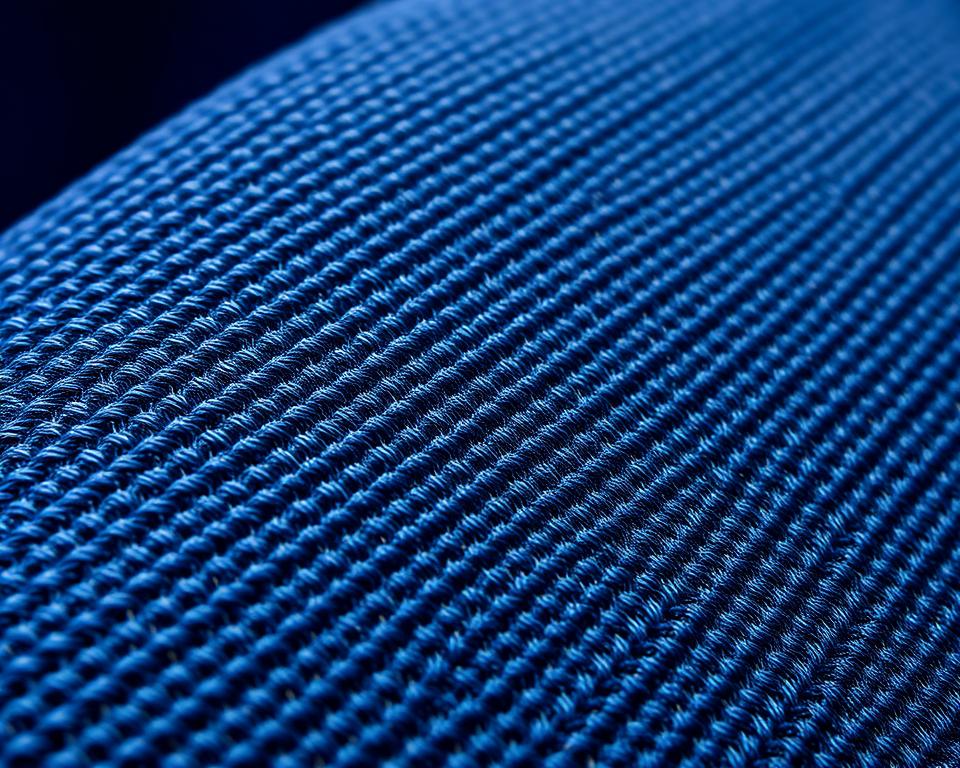
Selvedge denim fabric is distinct from regular denim due to its unique construction and finished edges. It draws its name from the “self-edge,” a dense woven strip that stops fraying. This top-tier fabric embodies a commitment to slow fashion and classic artisanry, distinguishing it from factory-produced denim.

black selvedge denim fabric

What Self-Edge Construction Signifies

The term “selvedge” is a blend of “self” and “edge,” describing fabric with a clean, finished border. This narrow selvage runs along both sides, removing the requirement for added finishing. Old-school mills craft it at roughly 30–32 inches wide, unlike contemporary denim’s 60-inch span.

Shuttle Looms and Their Unique Fabric Borders

Shuttle-loomed denim’s character comes from vintage weaving machines that weave at slower speeds. These looms weave a single weft yarn across the warp threads in one motion. This method results in:

  • Organic textural slubs
  • A plusher hand-feel versus modern denim
  • Firmly locked edges that avoid fraying
  • Real irregular traits loved by denim aficionados

How Selvedge Differs from Standard Denim

Conventional denim is woven on projectile looms sending weft yarns across wider bolts. Such weaving leaves loose edge fibers requiring overlock stitching to stop fraying. Selvedge denim fabric, on the other hand, takes more time to produce. It provides greater longevity and a special style, meriting its loftier price tag.

Heritage and Historical Roots of Shuttle-Loomed Denim

The legacy of heritage denim commenced in U.S. textile mills of the 1800s. Shuttle looms were central, weaving material with sealed edges to avoid fraying. That approach yielded indigo-dyed denim slowly and painstakingly, guaranteeing each yard was made with precision. Its slender width evolved into a trademark of artisan denim manufacture.

From 19th-Century U.S. Mills to Contemporary Revival

For upwards of a century, American factories leaned on shuttle looms. Labels like Cone Mills and White Oak delivered high-end denim to workwear firms. Come the 1970s, speedier projectile looms dominated, supplanting most shuttle setups. That change stemmed from the push for more affordable, mass-made jeans. Several historic factories wound down or upgraded, causing vintage looms to languish.

Japanese Renaissance of Selvedge Denim

In the 1980s, Japanese manufacturers revived American shuttle looms. Leading the charge were the Osaka Five brands:

  • Studio D’Artisan
  • Evisu
  • Fullcount
  • Warehouse
  • Denime

Those firms blended U.S. retro flair with Japanese exactness. They researched antique Levi’s templates, reproducing classic indigo denim textures. By the year 2000, Japan ruled the world’s artisan denim scene.

Relevance of Classic Weaving Now

Shuttle looms create special fabric features unmatched by modern equipment. This slower method fosters subtle irregularities and fuller indigo soak. Hardcore denim fans treasure these quirks as proof of real craftsmanship.

Shuttle Loom Features Modern Loom Features
29-31 inch fabric width 60+ inch fabric width
3-4 yards per hour 15-20 yards per hour
Natural irregularities Uniform texture
Self-finished edges Cut edges requiring overlocking

How Premium Denim Gets Made on Vintage Looms

The birth of premium denim begins with shuttle looms’ measured cadence. These machines differ from today’s technology. They shuttle yarn across the full width at once, binding edges without further work. This method ensures selvedge denim has a clean, non-fraying edge.

Antique looms run slowly, churning out only 5–6 meters of striped denim fabric per day. This sharply contrasts with current machines that manage 200 meters. The unhurried pace advantages the yarn via:

  • Reduced fiber tension yields a gentler feel
  • Organic irregularities stay put, granting unique texture
  • Uneven surfaces lead to distinctive fading patterns
  • Thin widths (about 29–32 inches) minimize trimming waste

Running these vintage looms demands expert operators. Operators fine-tune tension, track cadence, and carry out maintenance. Each shuttle loom carries its own character. Some date back to the 1920s, needing specific knowledge passed down through generations. This tactile method turns shuttle-loomed denim into an authentic artisan good.

The slim width of dry denim on antique looms offers a real advantage. Pant makers utilize the selvedge edge as the outrigger seam, avoiding waste. This highlights the material’s genuine build. Each bolt tells its own tale, boasting faint differences factory lines can’t duplicate.

Understanding Raw Denim vs Selvedge Differences

A lot of denim fans mix up raw denim and selvedge denim. This confusion arises when shopping for premium jeans. The truth is, these terms describe different aspects of denim production. Knowing the difference helps you make better choices and appreciate each type’s uniqueness.

Why Not All Selvedge Is Raw

Selvedge refers to the weaving method on vintage shuttle looms, creating self-finished edges. Raw denim means unwashed fabric straight from the mill. A selvedge raw denim supplier may stock washed and unwashed varieties. Labels such as Naked & Famous make selvedge jeans, occasionally pre-rinsed or with elastane.

The weaving style is identical. However, finishing transforms both the cloth’s texture and appearance.

Washed and Unwashed Denim Compared

All denim starts as dry denim prior to wash. Mills produce both standard and selvedge versions unwashed. The main differences are:

  • Raw denim evolves custom fade patterns via use
  • Washed denim delivers immediate softness and size consistency
  • Sanforized raw shrinks little after initial laundering
  • Unsanforized denim shrinks notably upon soaking

Clearing Up Denim Myths

Not all raw denim comes from shuttle looms. Contemporary projectile looms likewise churn out unwashed textile. Their draw intersects as shoppers esteem resilience, personalization, and craft in selvedge and raw alike. Each style lures denim aficionados ready to devote time for bespoke fades.

Spotting Genuine Selvedge Denim Traits

When hunting for selvadge raw denim fabric wholesaler, identifying authentic selvedge denim is crucial. It separates you from everyday customers. Genuine selvedge denim boasts characteristics missing in standard denim. Knowing these signs guarantees you’re buying true high-end denim.

Finding the Selvedge ID

The clearest way to spot selvedge denim is viewing the outseam. Roll your cuffs and examine the seam on the leg’s outer side. Genuine selvedge denim has a clean, finished edge with colored yarns woven into the fabric. That self-finished border removes the necessity for overlock stitching typical in normal denim.

Cuffing your jeans reveals the selvedge ID, imparting distinctive flair to your look. The colored edge yarns run continuously down the outseam, creating that signature look denim enthusiasts adore. By contrast, non-selvedge jeans sport cut edges bound by serger stitches to stop fraying.

Identifying High-Quality Construction

Quality premium denim is evident through several construction details:

  • Tight, even weaving with no loose threads
  • Clean selvedge edges without additional stitching
  • Consistent colored yarn throughout the outseam
  • Substantial cloth weight indicative of shuttle-loom output

Rainbow vs Redline Selvedge Distinctions

Rainbow selvedge denim features multiple colored yarns in the selvedge ID, creating a unique multicolor edge. Redline selvedge, the renowned style, features red edge yarns and originates from heritage American mills. These special selvedge styles command higher prices due to their rarity and visual appeal. Most brands proudly highlight these features in product descriptions, making authentic heritage denim easier to identify.

Why Craft Denim Costs More

The price of artisanal denim frequently surprises first-timers. A set of selvedge jeans may run three to five times higher than standard jeans.

Comprehending what drives these costs shows the actual value of premium denim.

Shuttle looms operate at a far slower rate than modern counterparts. While mass-production looms yield fabric swiftly, heritage shuttle looms turn out just 1–2 meters each hour. This slow process means a single roll of heritage denim takes days, not hours.

The slender breadth of selvedge fabric hikes up costs. Whereas conventional denim comes 60 inches wide, shuttle-loomed premium denim measures only 28–32 inches. Such narrowness demands extra planning and precision cutting to optimize usage.

Artisan denim is produced in limited lots. Mills like Okayama’s White Oak and Kuroki prioritize quality over quantity. They employ master craftsmen who oversee every step:

  • Hand-checking yarn tension
  • Adjusting loom settings for each fabric type
  • Inspecting every meter for flaws
  • Managing rope-dyeing processes that take weeks

These weavers consider their work an art form. They play with distinct yarns and hone indigo-dye recipes handed down through the lineage. Backing heritage denim helps mills safeguard textile legacies and artisans devoted to their work.

Wholesale Choices for Black Selvedge Denim Fabric

The high-end denim scene has expanded past Japan’s classic mills. American brands now compete, providing a wide range of black selvedge denim fabric wholesale. Choosing the best vendor requires grasping telltale signs and true material provenance.

Finding Quality Suppliers and Manufacturers

Premium suppliers highlight classic weaving and heartfelt commitment to artistry. When seeking a selvedge raw denim wholesale source, pick mills operating antique shuttle looms. These suppliers offer detailed fabric specs, including weight, weave pattern, and dye methods.

Leading Gold Selvedge Denim Mills

Gold selvedge denim fabric manufacturers focus on premium colored ID lines, adding luxury to jeans. Premier producers weave these specialty textiles in constrained runs, luring boutique makers. The gold-ID thread bestows an exclusive trim, differentiating them from usual choices.

Where to Find Nep Denim and Other Specials

Specialty fabrics like nep denim need specific sourcing channels. Nep denim boasts purposeful slubs for eye-catching texture. Partnering directly with mills guarantees availability of these niche weaves.

Fabric Type Minimum Order Lead Time Price Range per Yard
Black Selvedge 500 yards 6-8 weeks $12-18
Gold ID Selvedge 300 yards 8-10 weeks $15-22
Nep Denim 400 yards 10-12 weeks $14-20

Popular Selvedge Styles and Fabric Variations

Selvedge denim’s realm extends past plain indigo. Currently, manufacturers produce varied textures and designs. These demonstrate shuttle-loom weaving’s flexibility. Ranging from faint surface quirks to striking patterns, they deliver one-of-a-kind personality that evolves elegantly with use.

All About Slub Denim Texture

Slub denim’s unique textured surface originates from thick-thin yarn variations. They feature thick and thin zones, yielding an organically varied fabric face. On shuttle looms, they create slub-textured selvedge denim with random fade patterns.

Each pair of jeans made from slub denim develops its own unique pattern. Thick slub raised zones age in contrast to smooth zones, giving each a unique look.

Herringbone Selvedge Traits

Herringbone selvedge cloth sports a zigzag weave reminiscent of fish skeletons. The pattern forms diagonal ribs that reverse direction periodically. This design enhances appearance and amps up the material’s toughness.

Brands like Iron Heart and The Strike Gold routinely utilize this weave in their top-tier offerings.

Striped Denim Fabric and Unique Weaves

Striped denim blends different yarns to craft vertical or horizontal banding. Workrooms produce these stripes by alternating colored yarns in the weave. Notable variants include:

  • Hickory stripe with alternating indigo and white
  • Railroad stripe featuring thin pinstripes
  • Wabash stripe with printed dots over stripes
Fabric Type Visual Pattern Fade Characteristics
Slub Denim Bumpy, irregular surface High contrast, uneven fading
Herringbone Zigzag diagonal lines Subtle vertical streaking
Striped Denim Alternating color bands Pattern remains visible after fading

Maintaining Your Heritage Denim

Your heritage denim calls for tailored care to grow its special character. Raw and dry denim, unlike typical jeans, change shape with wear. They craft individual fade narratives reflecting your life.

The initial weeks in craft denim may feel rigid and awkward. This is normal. It takes time for the cloth to soften and contour your form. Some denim enthusiasts speed up this process by wearing their jeans in the shower or doing squats while damp. Others prefer a slower, more natural break-in period.

Raw denim develops its best fades when you wait to wash it. Natural skin oils and daily movement produce whiskers at knees and honeycombs on the back. Numerous denim heads wait half a year before the initial wash, with some waiting a full year. This discipline grants you dramatic, bespoke fades reflecting your motions.

When washing dry denim, flip it and rinse in cold water. Forego spin and drip-dry in shade. Others opt for gentle hand-wash in a bathtub using a soft detergent. Refrain from hot washes and dryers to prevent shrinkage and loss of fades.

Your heritage denim investment grows more valuable with proper care. Each use builds character, turning your jeans into a singular piece. The firm break-in becomes a flexible second skin mirroring your daily life.

Where to Buy Quality Indigo-Dyed Denim Today

The revival of selvedge denim has unlocked new paths for denim lovers. Big-box retailers stock indigo-denim next to boutiques specializing in premium and slow fashion. This allows consumers to find authentic selvedge options at various price points, catering to different budgets and styles.

Levi’s sells its 501 Original Fit Selvedge for $148, bringing heritage craft to more people. Uniqlo provides Selvedge Straight Jeans at just $50, appealing to those who value style and affordability. For those looking for higher-end options, Buck Mason features Japanese Loom State Selvedge Full-Saddle Jeans at $248. Iron Heart elevates artisan denim with its 634s-18 Vintage Denim for $385, sold at Self Edge.

American brands like Todd Snyder and Buck Mason now compete with Japanese specialists in the selvedge denim market. They understand that heritage weaving and top quality drive slow fashion. Online or offline, good indigo-dyed denim is easier than ever for American shoppers devoted to genuine craft.

Related: The Ultimate Guide to Understanding Selvedge Denim Fabric

How to Maintain and Store Your EV Charging Cables

Premier EV Charging Cable Manufacturers for Your Electric Vehicle

The EV market is expanding rapidly, with the demand for dependable and high-performance charging solutions growing exponentially. As of now, leading companies have been at the cutting edge of this change, providing top-tier charging infrastructure. Southwire, for instance, entered the market in 2014 and excels, boasting over 1000 five-star reviews and 75 years of experience in the electrical construction industry.

The rise in electric vehicle adoption necessitates the need for robust, rapid, and safe Charger Manufacturers in China. Key suppliers are innovating to address changing requirements, offering solutions that improve the overall charging experience.

Understanding the differences between various charging solutions is crucial for selecting wisely. High-grade charging infrastructure has a direct effect on vehicle performance and user experience.

Core Lessons

  • Leading brands provide premium cables that boost durability and security.
  • Growing EV adoption fuels demand for fast, reliable infrastructure.
  • Leading companies innovate to meet the evolving needs of electric vehicle owners.
  • Premium cables enhance both charge rate and vehicle function.
  • Investing in quality charging infrastructure is beneficial in the long run.

EV Charger Manufacturers

The Growing Importance of Quality EV Charging Cables

With EVs on the rise, the significance of premium EV charging cables cannot be overstated. The efficiency, security, and dependability of electric vehicle charging systems rest on the quality of the charging cables used.

Advancements in EV Charging

Charging tech for EVs has evolved rapidly, with a priority on faster charging speeds and improved safety features. Today’s EV charging cables are designed to meet these evolving needs, incorporating high-grade materials and advanced designs to minimize energy waste and maximize transfer rates.

Why Quality Matters in EV Charging Infrastructure

Quality charging cables directly impact the overall performance and safety of EV charging infrastructure. Durable features, such as all-weather performance and flexibility in extreme temperatures, maintain performance in harsh conditions. Moreover, meeting standards and following protocols are essential in ensuring that cables meet rigorous safety requirements.

Key Features Benefits
Superior materials and construction Reduced energy waste
Robust durability Weather resistance, flexibility in extreme temperatures
Regulatory compliance Rigorous safety requirements met
Serviceability Long-term value proposition, reduced waste

Products from Aichie Tech Electronics pass The Cable Lab’s stringent tests. By opting for serviceable Portable EV Charger, users can save hundreds over a decade by choosing repairs over replacements, lowering environmental impact.

Top EV Charging Cable Manufacturers in China

China is home to a growing number of EV charging cable manufacturers. They play a key role in global EV infrastructure, offering premium charging cables designed for various charging needs.

Wottz – Top EV Cable Maker from 2014

Wottz has established itself as a prominent player in the EV charging cable market since 2014. They offer a range of cables that meet the specific requirements of EV charging systems, from Mode 1, 2, 3, and fast-charging Mode 4 DC Charging.

Aichie Tech Electronics – 75 Years in Electrical Solutions

Aichie Tech Electronics’ seven-decade legacy informs its premium cable designs. Their products are designed to meet the demands of both domestic and commercial EV charging infrastructure.

Other Notable Manufacturers in the Market

Specialists in Type 1/Type 2 connectors and environmental-resistant cables are emerging players. These include specialists in Type 1 (J1772) and Type 2 (Mennekes) connectors, as well as brands innovating in cable durability and adaptability.

Types of EV Charging Cables Explained

As electric vehicles become increasingly popular, understanding the various types of EV Charging Cable Manufacturers is crucial for optimal charging experiences. Different cables suit different charging needs. The diversity in EV charging infrastructure necessitates a closer look at the different cable types available.

Type1 vs. Type2 Charging Cables

Type1 and Type2 charging cables are two common standards used for EV charging. Type 1, also known as SAE J1772, is North American standard, while Type 2, or Mennekes, is the European norm. The right cable matches your car and charger. Type 2 cables often handle greater power, making them ideal for speed.

AC Level2 vs DC Fast Charging

Level 2 AC cables charge faster, up to 19.2 kW. DC Fast Charging cables, on the other hand, provide rapid charging by converting AC power to DC within the charging station, delivering rapid fill-ups. These cables are essential for long-distance EV travel, enabling drivers to recharge quickly.

Portable and Tethered Cable Options

Portable EV charging cables, such as “Granny chargers,” offer flexibility by allowing owners to charge their vehicles from standard household outlets. Tethered cables are fixed to charging stations, offering ease at the cost of portability. The choice comes down to flexibility vs convenience.

Cable length, power rating, and connector type matter most. For instance, portable charging cables range from simple L1 cords to full L2 kits. Vehicle-to-load (V2L) cables represent an emerging category, enabling EVs to power external devices.

  • Portable charging cables offer flexibility, with options ranging from basic to more robust Level2 solutions.
  • Fixed cables add convenience, removing cable management tasks.
  • Cable length is a critical consideration, with options ranging from 5-meter standard cables to 50-meter extended cables.

Attributes of Premium EV Cables

High-quality EV charging cables are distinguished by several key features that ensure reliable and safe charging. These features are crucial for maintaining the integrity of the charging process and safeguarding the vehicle and user.

All-Weather Durability

Durability and weather resistance are paramount in EV charging cables. Manufacturers like Wottz and Southwire craft their cables from recyclable materials that adhere to ROHS compliance, ensuring they perform in harsh climates. Their serviceable design facilitates easy maintenance and promotes recycling.

User-Friendly Design

Flexibility and ease of use are also critical factors. High-quality EV charging cables are designed to be flexible, making them easier to handle and maneuver. This flexibility is combined with rugged construction for lasting performance.

Regulatory Approvals

Safety certifications and compliance with international standards are non-negotiable for reputable EV charging cable manufacturers. They ensure their products meet or exceed standards such as IEC62196 for connectors and UL2594 in North America. Independent labs verify safety, toughness, and weatherproofing.

Certification Description Region
IEC62196 Connector safety standards International
UL2594 Standard for electric vehicle supply equipment North America
ROHS Restriction of hazardous substances International

Emphasizing these attributes yields cables that are safe, durable, and user-friendly.

Cutting-Edge EV Cable Innovations

New cable tech is transforming EV charging, with a focus on ultra-fast charging, improved signal integrity, and eco-friendly materials.

Thermal-Managed Fast Charging

Cooling fluids enable higher charge rates, enabling electric vehicles to charge at significantly higher speeds without overheating.

Signal-Boosting Contact Designs

Hyperboloid contacts are being integrated into EV charging cables to enhance signal integrity, ensuring stable communication and power flow.

Eco-Friendly Cable Compounds

Companies focus on green materials, minimizing ecological footprint with RoHS-compliant, serviceable builds. For instance, companies like Aichie Tech Electronics and Wottz are adopting serviceable design philosophies and RoHS compliance to minimize waste and promote recycling.

Programs for cable recycling, non-toxic compounds, and TPU sheaths mark the eco shift.

Buyer’s Guide to EV Charging Cables

Selecting the proper cable ensures optimal performance. To make an informed decision, consider several key factors.

Connector Compatibility

Ensure the charging cable is compatible with your vehicle’s connector type. Your vehicle’s onboard charger capacity sets the upper limit for AC power.

Determining the Optimal Cable Length

Select a cord length based on parking and outlet location. A longer cable adds reach at the cost of extra weight.

Power Rating & Charge Rate

Match your cable’s power handling to your vehicle’s capabilities. Standard Level 2 home charging operates at 7.2 kW, but some vehicles support up to 19.2 kW with appropriate electrical service.

By considering these factors, you can select an EV charging cable that meets your needs and enhances your overall charging experience.

Final Thoughts on Premium EV Cables

With EV growth unabated, premium cables are essential. Choosing cables from Wottz or Aichie Tech Electronics provides long-term value and reliability. Their serviceable designs allow for component replacement, reducing waste and costs. This approach aligns with the core values of electric vehicle ownership by promoting sustainability.

Selecting top-grade infrastructure prepares you for next-gen charging.

Lifecycle Cost Analysis for SZ Stranding Line vs. Helical Stranding Line

Looking Forward: Fiber Optic Data Transfer Technology

Were you aware that one hair-thin fiber can transmit over 100 terabits of data per second? That’s enough to stream 12 million HD movies simultaneously—quite a jump compared to the 1950s, when scientists first harnessed light to send basic signals.

  • Data transmission rates 100x faster than old copper lines
  • No disruption from electrical or radio noise
  • Capacity to support 5G networks and 8K streaming
Characteristic Copper Wiring Fiber Optic Cables
Data Rate Up to 10 Gbps Exceeding 100 Tbps
Range Approximately 100 m Over 70 km
Privacy Prone to tapping Extremely hard to intercept

Light pulses bounce through glass cores using total internal reflection, like a laser ricocheting through a mirrored tunnel. This physics trick prevents signal loss, even over continental distances. As video calls and smart devices multiply, these cables keep networks from collapsing under data weight – SZ stranding line.

Evolution of Fiber Optic Communication Technology

Decades of innovation transformed light-based data transfer from theory to reality. Researchers in the 1950s discovered that glass strands could guide light—a concept that reshaped modern connectivity.

Df783Ebe D752 488F 81Fa 568A036C2114

Pioneers and Initial Trials

In 1952, Narinder Singh Kapany demonstrated that light could propagate through curved glass fibers. He named the field “fiber optics,” establishing the basis for modern fiber networks. Together with Harold Hopkins, he created pliable imaging bundles, which became prototypes for data-carrying fibers.

By the 1960s, labs demonstrated practical uses for these strands. Although initial implementations suffered loss, ongoing experiments improved their efficiency. Researchers found that ultra-purified glass cores extend signal reach with minimal distortion.

Milestones in Fiber Development

In the 1970s, the first commercial deployments revolutionized the industry. Carriers switched from copper to fiber, enhancing call quality and bandwidth. In 1970, Corning Glass Works introduced low-attenuation fiber capable of 65 km spans.

Year Achievement Significance
1977 Initial live telephone transmissions Validated practical dependability
1988 Launch of TAT-8 transatlantic link Linked Europe and North America
1990s Introduction of erbium-doped fiber amplifiers Allowed extensive long-haul connections

Modern advancements focus on speed and scalability. Dense wavelength-division multiplexing (DWDM) now lets single strands carry multiple data streams simultaneously. These leaps bridge lab experiments to the backbone of global communication systems.

Basic Principles of Fiber Optic Data Transfer

Light travels faster than anything else—so why not use it to send messages?. This simple idea powers modern networks. Instead of slow electrons in copper wires, engineers use photons to zip data across continents. Here’s how it works.

Photons vs. Electrons: Why Light Wins

Optical signals transmit data more effectively than electrical currents. Photons:

  • Travel at ~186,000 mi/s (~99.7% of c)
  • Don’t create heat or electromagnetic interference
  • Support simultaneous multi-wavelength channels
Factor Electrons (Copper) Photons (Glass)
Speed Max ~10 Gbps 100+ Tbps
Interference Affected by power lines Immune
Energy Use High Low

The Mirror Effect Inside Glass Strands

Photons remain confined within the fiber’s core by total internal reflection. The core has a higher refractive index than the surrounding cladding. Upon striking the boundary at a critical angle, it reflects internally, traveling long distances.

Such a design minimizes attenuation. Even over long distances, 95% of the original light reaches its destination. Combined with laser precision, it ensures your video calls stay crisp and your downloads finish fast.

Different Types of Fiber Optic Cables

Fibers come in diverse designs. Choosing depends on required reach and bandwidth demands. Below are the two primary classifications and their distinct features.

Attribute Single-Mode Multi-Mode
Core Size 9 µm ~50–62.5 microns
Bandwidth 100+ GHz 35–500 MHz
Max Distance 120 miles ~1,600 ft
Common Uses Telecom networks Local area networks

Hospitals use single-mode for MRI image transfers between buildings. Schools often pick multi-mode for classroom networks—it handles video streams without breaking budgets. Both types keep our world connected, just in different ways.

Anatomy of Fiber Optic Cables

Ever wondered what keeps your internet running smoothly during a storm This is due to advanced cable engineering. Multilayer structures shield information as it moves at near-light velocity.

Core, Cladding, and Coating Layers

Each fiber’s core is ultra-thin, even narrower than human hair. This ultra-pure strand carries light signals using total internal reflection. The cladding layer, with a lower refractive index, reflects stray light back into the core.

An acrylate polymer coating encases the cladding and core. This 250-micron shield prevents scratches and moisture damage. Collectively, these layers create the optical conduit for data.

Strengthening Fibers and Protective Jackets

Kevlar® reinforces the coated core, ensuring tensile strength. These aramid fibers absorb tension during installation, preventing breaks when pulling cables through conduits. An outer polyethylene jacket completes the package, resisting weather, chemicals, and curious rodents.

Component Material Purpose
Central Glass Pure silica glass Light transmission
Cladding Doped silica Signal containment
Coating Acrylate polymer Physical protection
Jacket Polyethylene Environmental shield

Jacket colors indicate type: orange for multi-mode, yellow for single-mode. This simple system helps technicians quickly identify cable types during installations or repairs.

How Fiber Carriers Transmit Data

How does information travel at light speed without getting lost It involves converting electrical pulses into controlled optical bursts. Each pulse represents binary code—flashes for 1s, gaps for 0s—creating a rapid-fire Morse code only lasers can read.

Photon-Based Signaling

Lasers fire 500 million light pulses per second through glass pathways. By using QAM-16, four bits encode per pulse, multiplying throughput – Fiber coloring machine. Such optical signaling is virtually immune to EMI that plagues copper lines.

Managing Dispersion & Attenuation

Two main challenges disrupt flawless transmission:

  • Chromatic dispersion: Different light colors (wavelengths) arrive at varying speeds.
  • Modal dispersion: Multiple ray paths diverge in multi-mode fibers.

Modern cables combat these issues through:

Remedy Effect Improvement
Specialized core doping Equalizes wavelength speeds ~40% reduction in pulse broadening
Digital signal processors On-the-fly error mitigation 99.999% accuracy

Signal loss drops to 0.15 dB/km in premium cables—a 92% reduction from early designs. Paired with EMI-resistant layers, they preserve signal fidelity worldwide. Consequently, transoceanic calls remain sharp despite severe weather.

Advanced Concepts in Optical Fiber Networking

What keeps your video calls from freezing during a storm The answer lies in specialized connectors and precision installation methods that form the backbone of modern networks. These components ensure seamless data flow across cities and continents.

Fiber Termination & Splicing Methods

Network reliability starts with proper connections. SC connectors offer tool-less insertion; LC connectors compress for high-density environments. MPO/MTP designs handle multiple strands at once—perfect for data centers moving massive files.

Splicing primarily uses two approaches:

  • Fusion jointing: Melts glass ends together for near-zero signal loss.
  • Mechanical jointing: Uses alignment sleeves for fast, reusable splices.
Connector Type Ideal Use Insertion Loss
SC Enterprise networks ~0.25 dB
LC Dense patch panels ~0.20 dB
MPO Data center interconnects 0.35 dB

Contemporary Network Architectures

Today’s architectures demand flexible installations. Micro-duct systems permit cable blowing; armored jackets resist severe environments. In smart cities, fibers weave through traffic lights and security cameras, creating responsive urban networks.

Telecom operators roll out hybrid assemblies, merging electrical and optical conductors. This approach supports 5G towers and IoT devices simultaneously, proving that smart design keeps pace with our connected world.

High-Speed Data Transmission and Bandwidth Benefits

Think of data as water flowing through pipes—the wider the pipe, the more you can move at once. This bandwidth principle underlies the shift to fiber optics. Where copper struggles like a garden hose, advanced cables act as firehoses, handling thousands of HD streams simultaneously.

  • Light signals traveling at 186,000 miles per second
  • Many channels by WDM
  • FEC slashes retransmissions by ~80%
Decade Max Speed Cost per GB
1980s 45 Mbps Approximately \$1,200
2000s 10 Gbps $0.12
2020s 178 Tbps ~\$0.0004

Throughput dictates online performance. Video calls require ~5 Mbps each; VR needs ~50 Mbps. NEC’s 2023 analysis found fiber nets serve ~40× more subscribers than copper at ~50% lower power consumption.

“Every dollar invested in high-capacity networks yields $3.80 in economic growth through improved productivity.”| “Each \$1 poured into high-bandwidth infrastructure returns \$3.80 in productivity gains.”

— Tech Market Analytics, 2023

Enhanced performance trims OPEX. Signals travel 60 miles without repeaters versus copper’s 3,000-foot limit. This efficiency enables 8K video streaming, real-time AI processing, and seamless cloud backups—all while keeping your monthly bill under $100.

Mitigating Noise & Attenuation

Have you experienced static-laden calls in storms? Copper wiring falters when EMI spikes. Optical fibers shrug off such noise. By leveraging photons rather than electrons, they eliminate interference from electricity or RF sources.

Built-In Noise Cancellation

While copper acts as an antenna, fiber is non-conductive. This means they ignore disruptive signals that plague copper networks. A 2023 study found 92% fewer data errors in industrial settings when using light-based systems compared to older methods – fiber ribbone line.

Mitigation of loss relies on:

  • High-purity cores minimize photon scattering
  • Precision laser alignment minimizes power waste
  • Hydrophobic layers block water infiltration
Factor CM Glass-Based
Interference Risk High Negligible
Signal Loss per Mile 3 dB 0.2 dB
Maintenance Needs Monthly checks ~Yearly reviews

“Our factory’s error rates dropped 80% after switching to light-based networks—no more machine downtime from radio interference.”| “After switching to fiber, error rates fell by 80%, eliminating downtime from RF noise.”

— Manufacturing Weekly Case Study

These cables thrive where others fail. Undersea lines resist seawater attack; desert runs survive sandstorms. Boasting ~99.995% reliability, they power essential infrastructures globally.

Fiber’s Role in Telecom & Internet Services

What delivers instant streaming from overseas servers? Fiber networks serve as the neural pathways of today’s Internet. These systems power everything from streaming services to stock market trades, using light to bridge continents.

Role in Long-Haul and Metro Networks

Transcontinental cables stretch over 750,000 miles under oceans, carrying 99% of global internet traffic. Urban rings use these fibers to connect cell sites and corporate hubs. Optical transmitters modulate light; receivers demodulate at endpoints.

Feature Copper Networks Fiber Infrastructure
Speed ~1 Gbps 100 Tbps
Lag 5 ms/km 0.005 ms/km
Uptime 99.9% ~99.995%

Data Center & Cable Television Uses

Within data centers, fibers enable rack-to-rack transfers, shifting petabytes each day. Cable providers deliver 4K content through hybrid fiber-coaxial systems. Verizon’s 2023 upgrade cut buffering complaints by 73% in urban areas.

Economic incentives accelerate uptake:

  • Maintenance costs ~60% lower than copper systems
  • Easily scalable for 5G traffic
  • 40% energy savings per data unit

From Wall Street to undersea cables, fiber networks demonstrate that high speed and stability go hand in hand. As one engineer noted: “You can’t beat light for moving mountains of data.”

Next-Generation Fiber Innovations

What if your internet could handle 8 billion video calls at once. Upcoming breakthroughs promise to redefine data mobility. Cutting-edge devices and smarter signal methods are pushing networks to new limits.

Advancements in Laser Transmitters and Photodetectors

Modern lasers now fire 200 wavelengths simultaneously—up from just 40 a decade ago. These tiny chips pack 5x more power while using 30% less energy. Combined with graphene-based photoreceivers, they detect even minimal photon levels.

Key breakthroughs include:

  • Lasers with narrow linewidths cut optical noise by ~90%
  • PICs consolidate functions, shrinking component footprints
  • Machine-learning calibration optimizes performance in real time

Coherent Transmission and Multiplexing Techniques

Coherent optics modulate both phase and amplitude to encode information. Such techniques increase throughput ~16× over basic on-off keying. Coupled with WDM, fibers can transport over 800 channels.

Method Wavelengths Speed Gain
DWDM ~160 ~80 Tbps
OFDM 512 ~120 Tbps
SDM Multi-core 1 Pbps*

*Under development by NTT, 2023 results

Such approaches mesh with current networks with minimal overhaul. Verizon’s 2024 upgrade used coherent tech to double network capacity without laying new cables. An engineer remarked: “Repurposing legacy fibers with coherent methods unlocks untapped potential.”

Worldwide Fiber Standards & Guidelines

How do international calls remain glitch-free? Global standards act as invisible rulebooks, ensuring every piece of the puzzle works perfectly together. Absent these specs, infrastructure would face mismatches and inefficiencies.

Specification Focus Area Impact
ITU G.652 Single-mode transmission Enables 100Gbps+ speeds
IEC 60793-2-50 Durability standards Certifies two-decade service life
ITU G.654 Undersea fiber Prevents saltwater corrosion

Testing & Quality Benchmarks

Consistent testing keeps networks running smoothly. Primary metrics: attenuation (<0.25 dB/km) and tensile rating (>50 N). Vendors conduct over 200 quality tests, including thermal and bend stress trials.

“Our compliance with IEC 61300-3-35 reduced installation errors by 65% last year.”| “Adhering to IEC 61300-3-35 led to a 65% drop in deployment mistakes.”

— Network Solutions Quarterly Report

Certified parts and precise specs avert expensive rework. Installers use standardized color codes and termination methods, creating seamless connections between equipment from different vendors. This harmony keeps global data flowing without hiccups.

Case Studies: Successful Fiber Optic Implementations

How do cities handle millions of simultaneous video streams without crashing Real-world deployments show how smart planning and advanced cables keep our digital world running smoothly. Let’s explore two groundbreaking projects that reshaped global connectivity.

City Fiber Rollouts & Metropolitan Backbones

NYC’s Metro Fiber initiative addressed slow copper infrastructure, which hindered business connectivity by ~40%. They laid 800 mi of micro-trenched fiber beneath sidewalks, steering clear of subways and utilities. The result? Latency dropped from 14ms to 2ms, while download speeds jumped 600%.

Issue Solution Outcome
Subsoil crowding 3D mapping for route optimization ~92% quicker rollout
EMI challenges Armored MC fiber 99.99% uptime
Funding limits Public-private partnerships 30% cost reduction

Underwater & Cross-Ocean Deployment

MAREA spans ~4,000 mi from Virginia to Spain, delivering ~160 Tbps over 8 pairs. Teams contended with ~10,000 ft depths and marine hazards, deploying ROVs to trench cables into ocean floor. Costing \$160M, it transmits ~55% of transatlantic data.

“Subsea systems require 200+ design revisions before deployment. Every meter matters when you’re laying cable across tectonic plates.”| “Over 200 design iterations are typical for undersea cables. Small changes hugely impact viability across plates.”

— Global Connectivity Report 2023

Differences by deployment scenario:

  • City installations prefer bend-insensitive fiber for tight paths
  • Subsea systems require titanium-reinforced sheathing
  • Isolated sites rely on solar-driven amplifier stations

Both approaches prove that strategic design and durable materials can transform how we move data. Spanning city high-rises to sea depths, fiber underpins today’s digital existence.

Economic Impact and Scalability of Fiber Networks

What powers the streaming revolution and remote work boom It’s networks that pair CAPEX with OPEX efficiencies. Though \$60K/mi can be spent on installation, these fibers pay off over years of use.

Strategic Investment for Scalability

Modern fiber nets reduce OPEX by ~40% versus copper. Fewer repairs are needed—no more corrosion issues or EMI troubleshooting. A 2024 study showed:

Expense Category Legacy Systems Modern Networks
Installation \$45/meter \$28/meter
Energy Use 5W per device ~1.2 W/device
Service Calls 12/year 2/year

Global investment trends confirm this shift. Telecom giants plan to spend \$150 billion through 2027 expanding infrastructure. Urban projects now achieve 300% ROI within five years through increased productivity and reduced downtime.

Navigating Deployment Hurdles

Yet municipalities encounter three primary obstacles:

  • Permitting delays adding 18 months to timelines
  • Scarcity of skilled fiber technicians
  • Public resistance to street excavations

“Our Phoenix deployment took 22 months instead of 14 due to permit bottlenecks. Still, the network boosted local GDP by \$380 million annually.”| “Phoenix’s build required ~22 months, not 14, over permit delays—but delivered ~\$380M/year in GDP uplift.”

— Western Regional Infrastructure Report

Innovative solutions are emerging. Micro-trenching reduces street disruption by 80%, while public-private partnerships share financial risks. Such strategies enable cost-effective, scalable fiber deployment.

Cutting-Edge Fiber & Future Outlook

Fiber backbones are receiving performance upgrades. Researchers now push boundaries with materials thinner than spider silk and signaling methods that outpace traditional designs. Such progress aims to reduce latency and accommodate future data surges.

Upcoming Fiber Innovations

MIT’s 2024 experiments suggest hollow-core fibers (air-filled) may cut latency ~30%. By routing photons through near-vacuum cores, they minimize refractive loss. Simultaneously, multi-core designs pack seven data lanes into one cable—quadrupling current capacity.

Feature Current Tech Future Projection
Throughput ~100 Tbps 1.2 Pbps
Reach 70 km 150 km
Power Demand ~0.5 W/device 0.15 W/device

Emerging WDM packs ~400 channels per fiber, versus ~160 currently. This “spectral supercharging” lets networks handle 8K virtual reality streams without breaking stride.

Convergence with 5G/6G Networks

6G networks will lean heavily on upgraded cables to support millimeter-wave frequencies. Trials in Dallas show hybrid systems delivering 10 Gbps wireless speeds when paired with high-capacity backbones.

  • 5G small cells need fiber links every 500 feet
  • Ground-satellite nodes depend on ultra-low-latency backbones
  • Smart factories use real-time data flows for robotic precision

A 2023 Nokia study found networks using advanced modes reduced 5G latency by 82%. As one engineer noted: “Wireless needs wired bones—the faster the backbone, the smoother the airwaves.”

In Closing

The invisible threads connecting our digital world keep getting stronger. Over decades, advancements in materials and engineering transformed how we exchange information—from copper’s limitations to light-speed possibilities. Today’s networks prove faster isn’t just better—it’s essential for streaming, surgeries, and stock markets alike.

Modern systems thrive through smart design. Polymer coatings defend fragile cores; international specs guarantee interoperability. These innovations slash energy use by 40% compared to older methods, making high-speed access both sustainable and scalable.

Challenges remain, like installation costs and public awareness. Still, ROI is strong—each \$1 spent returns ~\$4 in economic output. As 5G expands and AI demands real-time data, reliable infrastructure becomes non-negotiable.

Future endeavors will extend these frontiers. Hollow-core cables and multi-wavelength tricks could soon make today’s speeds look quaint. One thing’s clear: the way we share knowledge will keep evolving, driven by humanity’s endless quest to connect faster, farther, and smarter.

Related: The ROI of Strong Security: Protecting Your Bottom Line

The Complete Guide to Manual Machining Services in Houston

Houston CNC Lathe Fabrication Experts – Custom Parts

What does it take to create accurate parts with swiftness and reliability? Notable Manufacturing Group stands out as a leading source of state-of-the-art processing options in the region. Covering regions such as Downtown Houston, Sugar Land, and Pearland, they specialize in top-notch bespoke parts.

Featuring expertise in multiaxis operations and three-dimensional printing, they process intricate tasks with efficiency. Expertise in materials like titanium and stainless steel guarantees durability for manufacturing purposes. Their ISO-certified processes and immediate estimates establish them as a proven partner for 5 axis machining Houston businesses.

Main Takeaways

  • Leading source for bespoke manufacturing in the Greater Houston region
  • Capabilities feature 5-axis operations and quick-turn prototyping
  • Handles high-strength materials like titanium and high-performance alloys
  • Provides rapid delivery with immediate estimates
  • Standards-accredited for excellence in quality

Exact CNC Lathe Machining Services in H-Town

From hydraulic cylinders to aerospace components, customized equipment ensure exactness. Notable Manufacturing Group delivers tailored solutions for fields needing concentric parts with narrow tolerance ranges.

Their lathe machining covers facing, threading, and grooving operations. Featuring capacities of 31 inches in diameter and 30 feet in length, they manage large-scale projects seamlessly.

Metals including brass, alloyed copper, and hard steel are fabricated on a daily basis. For space-related projects, a high-performance superalloy is fabricated with skill, providing resilience even in harsh settings.

Substance Typical Applications Accuracy (±)
Brass Plumbing, electrical 0.005″
Superalloy 718 Airframe and turbine systems 0.001″
Tool Steel Tooling and dies ±0.003″

Post-machining steps like thread inspection and API threading improve final part quality. All items are inspected using CMM to ensure a tolerance of ±0.001″.

Clients rely on these machining services for reliability and speed. In both prototyping and large-run manufacturing, exactness is maintained.

Why Opt for Our Houston CNC Lathe Solutions?

For scenarios demanding exactness and quick turnaround, the right partner is essential. Clients trust our team for tailored solutions that meet strict deadlines without compromising quality.

State-of-the-Art Tools and Machinery

Advanced technology deliver exactness for complex projects. Featuring nearly continuous production, urgent orders are completed swiftly.

Skilled Operators

Skilled professionals process metals including Inconel and titanium. Their know-how secures steady performance, even for tight-tolerance components.

Rapid Processing

Expedited lead times and a rapid quotation process enhance operational efficiency. A dynamic monitoring platform ensures customers are informed during every phase.

  • Continuous service for urgent orders
  • JIT inventory management cuts excess inventory
  • Focused delivery services for all Texas shipments

Streamlined operations underpin all tasks, ensuring reliability from prototype to full-scale production.

Cnc3

Our Advanced CNC Services

Modern manufacturing requires flexible methods for challenging tasks. From intricate geometries to high-volume runs, advanced techniques guarantee optimal accuracy along with high efficiency.

Rotational Machining

Components produced by turning demand high precision. Operations such as face turning, thread cutting, and grooving are maintained to ±0.001″ tolerances. Materials including brass and Inconel are fabricated for long-lasting performance.

Multi-Axis Milling

Milling systems fabricate both planar and curved finishes. This method is ideal for sculpting complex cavities, especially in tool steel and aluminum applications.

“Accuracy is more than numbers—it’s repeatability under production pressures.”

5-Axis Techniques

Using 5-axis methods cuts down on configuration time for complex aerospace elements. It enables machining of intricate angles and curves not possible with standard lathes.

Rapid Prototyping and Additive Manufacturing

Rapid prototyping accelerates design validation. Stereolithography builds precise medical models, and FDM aids in functional trialing. Direct Metal Laser Sintering provides durable metal components via 3D printing.

  • Urethane casting for low-volume batches
  • GD&T standard verification
  • DFM feedback via CMM reports

Market Sectors We Cater To

Industries with high standards rely on precision-manufactured parts to ensure performance. Distinctive Manufacturing Group provides tailored solutions for industries where durability and accuracy are non-negotiable.

Air and Space

Essential aerospace parts require minimal tolerances and specialized alloys. From turbine blades to landing gear, parts withstand extreme temperatures and stress.

Petroleum Industries

Durable valves, drill bits, and pipelines endure harsh environments. Mass production reduces operational delays in oil and gas fields.

Industry Essential Elements Typical Alloys
Aviation Engine mounts, hydraulic systems Inconel, titanium
Energy Valve bodies, drill collars Stainless steel, duplex alloys
Military Protective armor and sensor arrays Ballistic-grade steel, composites

“In defense projects, efficiency isn’t optional—it’s mission-critical.”

Defense Sector

Custom elements are fabricated for maximum durability in hostile environments. Tailor-made defense parts and armor pieces are designed to fulfill strict military standards quickly.

Medical and Healthcare

Surgical tools and implantable devices require biocompatible materials. Initial prototypes confirm compliance with FDA regulations before production ramps up.

Automotive

Parts like EV battery casings and suspension systems focus on durability while being weight-efficient. Large-scale production of brake calipers upholds industry quality benchmarks.

  • 5-axis machined engine blocks
  • Rapid prototyping for electric vehicles
  • API-certified transmission parts

Materials We Work With

Robustness begins by selecting superior materials for production. Distinctive Manufacturing Group chooses metals, plastics, and alloys tailored to withstand industrial demands. Each material offers unique properties, ensuring optimal performance for specialized applications.

Metallic Materials

Aluminum, stainless steel, and titanium are staples for high-strength parts. Their properties provide an optimal mix of strength and resistance, essential for aerospace and automotive sectors. These metals are machined to exacting standards for detailed, complex designs.

  • Aluminum: Lightweight yet durable for structural components
  • Stainless steel: Offers corrosion resistance and strength
  • Titanium: Essential for high-performance applications in aerospace

Synthetic Substances

Materials such as Nylon, Delrin, and PVC offer adaptable solutions for synthetic components. These materials excel in electrical insulation and low-friction environments. Biocompatible plastics are chosen for their safety and accuracy in medical applications.

  • Nylon: Wear-resistant for gears and bearings
  • Delrin: Dimensional stability in mechanical assemblies
  • PVC: Chemical-resistant piping and fittings

Advanced Metal Compositions

Inconel, brass, and copper alloys handle extreme conditions. Inconel 718, for example, is trusted for turbine blades due to its heat resistance. Naval brass machining ensures reliability in marine applications.

  • Inconel components designed for high heat in aircraft engines
  • Beryllium copper elements offer excellent conductivity and robust performance
  • Valve elements from Monel provide exceptional resistance to corrosion in seawater

“The essence of material science lies not only in its makeup—it’s about performance under challenging conditions.”

Quality Assurance and Precision

High-quality standards differentiate outstanding fabrication from typical outputs. Their processes incorporate advanced quality checks to guarantee excellence in every piece.

Coordinate Measuring Machine (CMM) Inspection

CMM technology ensures measurements with a tolerance of ±0.001″. Each component is inspected via CMM against its digital twin. This eliminates deviations before final delivery.

Precision Machining at Narrow Tolerances

Tight tolerances demand expertise. Inconel and titanium components are refined using exacting equipment for consistent results. Thread measuring and API threading refine critical aerospace and oilfield components.

ISO Certification and Compliance

Certifications such as ISO 9001:2015 and NADCAP affirm our quality commitment. Our comprehensive quality management system monitors materials from acquisition to delivery. Supplier audits and traceability protocols ensure consistency.

  • Continuous improvement programs refine processes annually
  • Immediate measurement data adheres to GD&T criteria
  • Comprehensive documentation ensures complete transparency

From prototype validation to full-scale runs, quality assurance is embedded in every step. Delivered parts consistently outshine industry expectations in quality.

Custom CNC Machining Solutions

Personalized fabrication solutions satisfy individual industrial requirements with high precision. Whether producing early prototypes or complete production batches, each part is designed to precise criteria. All-in-one solutions streamline the production process and minimize logistical challenges.

DFM strategies enhance component performance and reduce expenses. Our engineers jointly improve design, select the best materials, and optimize tolerances. Early design feedback reduces costly revisions and shortens development time.

Using reverse engineering, outdated parts are accurately reproduced. Advanced scanning captures intricate details, ensuring accurate reproductions. Whether for limited runs or diverse, high-volume manufacturing, quality remains paramount.

Complementary services including assembly and packaging optimize distribution. Advanced coatings and treatments, such as anodizing and powder coating, boost product durability. Each solution is calibrated to industry-specific requirements, whether aerospace or medical devices.

“True customization isn’t just about specs—it’s about solving unseen challenges before they arise.”

Affordable Pricing with Instant Quotations

Budget-friendly solutions coexist with rigorous quality in production. Our team balances affordability and quality, keeping projects financially sound. Rapid quotes and quick pricing adjustments support time-sensitive projects. Our digital system streamlines quote requests, providing real-time clarity for competitive pricing.

Bulk pricing decreases individual part costs, accompanied by transparent cost analysis reports. This helps clients optimize their budget without sacrificing quality.

“Fast quotes provide more than mere expedience—it’s a strategic advantage for minimal waste.”

Collaborative design meetings adjust part details to cut costs. Total ownership breakdowns reveal long-term savings, from prototyping to full-scale runs. All quotes capture holistic value rather than just expense.

Local Houston CNC Machining Shop

Being local makes a difference when speed and quality count. We support clients all over Houston and beyond—from Pasadena to The Woodlands—with direct, interactive service.

Walk-in consultations allow clients to discuss projects face-to-face. Tours of our plant exhibit cutting-edge technology and clear processes. Rapid on-site support reduces production delays.

“Working with a local provider offers benefits beyond location—it’s a strategic asset for agile production.”

Regional sourcing accelerates material availability, as statewide shipping optimizes delivery without delays.

Working with regional partners showcases commitment to local industry. From small projects to complete manufacturing, our facility ensures dependable service locally.

The Final Word

Accurate fabrication depends on technical know-how and nearby support. We offer accredited, 24/7 machining solutions for critical military and medical projects.

Free design consultations help clients fine-tune their projects. Reach out immediately through call, email, or our digital form for fast feedback.

Their services extend across Texas, supported by a network of trusted partners. Whether in early design or mass production, dependable results are ensured.