Understanding The Engineering Behind The Shurflo Model 2088

2088 Series Shurflo Pumps from Installation Parts Supply

Did you know that a single faulty water pump can disrupt operations for an entire farm or leave an RV without a crucial resource? Reliability isn’t just a feature; it’s a necessity.

When professionals and homeowners rely on steady water flow, having the right equipment changes everything. As a wholesale partner for shurflo 2088 423 344, Installation Parts Supply provides access to the entire selection of these respected pump products.

The 2088 series is engineered to handle challenging jobs with ease. You get high flow output at moderate pressure, which works well across many different tasks. From liquid transfer jobs to targeted agricultural spraying, these pumps maintain dependable performance.

If you require a 12VDC pump for vehicle systems or a 115 VAC version for residential use, there is a model that fits. Installation Parts Supply helps you obtain the precise product your application calls for, supported by competitive wholesale pricing and expert guidance from selection through maintenance.

Product Overview and Key Specifications

Professional-grade water systems require precise engineering specifications to guarantee reliable performance under varied operating conditions. The technical details provide essential guidance for selecting the optimal equipment configuration.

shurflo water pump

Introduction to the Pump Lineup

This delivery pump lineup features multiple model designations that correspond to specific operational requirements. Every configuration provides unique combinations of voltage options, flow capabilities, and pressure settings.

These models provide between 3.0 and 3.6 GPM, covering different demand requirements. Such a range effectively supports continuous use as well as intermittent-duty applications.

Detailed Specifications and Performance Metrics

Pressure ratings include a 45 PSI shut-off mechanism that activates at factory-set levels. An adjustable pressure window from 30 to 50 PSI allows for customized performance tuning.

Voltage options include 12 VDC models for mobile applications and 115 VAC versions for standard installations. The lightweight design at approximately 4.8 pounds ensures easy transport and installation.

The positive displacement three-chamber diaphragm design ensures consistent flow rate performance. Santoprene diaphragm material provides chemical resistance and durability for long-term operation.

Integrated check valve features prevent backflow and protect the fluid system. Standard 1/2-inch port connections make integration with existing plumbing systems simple.

In-depth Product Features and Benefits

What sets these fluid transfer units apart are the thoughtful design elements that address common installation challenges. The engineering focuses on practical advantages that translate directly to user benefits across various applications.

They deliver high flow performance with consistent output between 3.0 and 3.6 GPM. This reliable performance high flow rate supports applications requiring substantial water movement without compromise.

A major advantage of this series is its self-priming functionality. These pumps can lift fluid from sources located 9–12 vertical feet below without manual priming. This design element removes many of the typical setup complications.

Feature Benefit Effect in Use
Self-priming up to 12 feet No manual priming needed, simplifying installation Lowers installation time and reduces system complexity
3.0–3.6 GPM operating flow Steady high flow performance Great choice for high-demand water transfer jobs
Multi-position mounting Flexible installation options Accommodates tight and varied spaces
Chemically resistant construction Durability with various fluids Safe for agricultural and industrial use

Moderate Pressure Applications and Safety Features

Applications operating at moderate pressure levels benefit from the 40–45 PSI maximum range. It delivers effective performance while avoiding over-pressure in sensitive systems. This pump design is also tuned for energy-efficient running.

Safety certifications including NSF, UL, and CSA listings guarantee compliance. The integrated check valves prevent reverse flow, and chemical-resistant construction stands up to fertilizers and mild chemicals. Their ability to handle many pressure scenarios makes these pumps versatile choices.

The maintenance-friendly approach allows service without specialized tools. As a result, downtime is reduced and overall operational life is extended. Lightweight construction makes handling easier during installation and service tasks.

Performance and Versatility of 2088 Series Shurflo Pumps

From agricultural fields to mobile RV systems, these diaphragm-based units maintain steady performance even as conditions change. The design of these systems is centered on reliable, repeatable performance where it matters most.

Reliable Operation Across Diverse Applications

One core benefit of these systems is their automatic demand operation. If system pressure dips below the preset threshold, the unit starts automatically. The unit turns off again when the system returns to the desired pressure level.

Such intelligent control reduces energy usage and lengthens motor lifespan. The positive displacement design ensures predictable delivery rates remain stable. Minor pressure fluctuations in the system don’t affect the consistent flow output.

Built-in thermal protection helps prevent motor damage during long operating cycles. They can tolerate brief dry-run conditions without significantly affecting long-term reliability. This safety feature adds another layer to overall system reliability.

These professional-grade systems handle various demanding scenarios effectively. They are well suited for spot spraying, multi-nozzle configurations, and fertilizer use. Their consistent water delivery adapts easily to differing operational needs.

Vibration resistance and chemical compatibility ensure dependable operation across diverse environments. Whether used in agriculture or in mobile water systems, performance remains consistently trustworthy. This is the level of reliability Installation Parts Supply customers have come to expect.

The Installation Parts Supply Advantage

Beyond technical specifications, the true value of professional water equipment lies in the distributor’s ability to deliver competitive pricing and comprehensive support. As a result, Installation Parts Supply stands out as a leading wholesale partner for contractors and dedicated enthusiasts.

Our pricing structure delivers significant savings for volume purchases. Bulk orders can reduce per-unit costs by up to 10%, making fleet operations and contractor stocking more economical.

A complete product lineup ensures you can locate the exact configuration you need. You can quickly view detailed specs and compare multiple models through the online catalog.

Reliable shipping services help ensure prompt delivery to job sites or residences. Many orders qualify for same-day or next-day shipping with advanced tracking information.

A secure checkout system supports multiple payment methods to keep purchasing flexible. You can rely on our team for expert advice in selecting the most suitable pump configuration.

Each purchase is supported by broad service policies and responsive assistance. This commitment to value turns Installation Parts Supply into a smart choice for professional water system components.

Applications, Reviews, and Shipping Details

Real-world usage and customer experiences provide the ultimate test for any water system component. This section examines how these pumps perform in daily tasks and what buyers report about reliability.

Ideal Uses for RV Non-Potable Systems and Beyond

These delivery pump models excel in mobile environments. Typical RV uses include flushing waste disposal systems and powering exterior washing operations.

Agricultural uses are equally impressive. These pumps supply steady flow for drip irrigation and targeted spot spraying. Their ability to self-prime from several feet below makes installation flexible.

  • RV non-potable water movement and tank refilling
  • Agricultural spraying and fertilizer distribution
  • Industrial fluid movement between containers
  • Water supply for mobile foodservice setups

User Reviews and Real-World Performance Insights

Model 2088-443-144 currently holds a 4.8-star average rating from 90 customer reviews. Reviewers regularly mention its dependable performance and simple installation process.

User comments often emphasize the benefits of the automatic pressure switch. This feature smoothly adjusts pump power in response to water demand. That functionality keeps flow consistent with no manual tweaking required.

Customers give Installation Parts Supply positive feedback regarding shipping. Buyers point out quick delivery and carefully secured packaging. Pumps arrive ready for immediate use in various applications.

Final Insights and Recommended Next Steps

Making an informed choice about your fluid transfer solution requires careful consideration of both technical specifications and supplier reliability.

The 2088 series offers professional-grade performance, including self-priming capability and built-in thermal protection. These advantages ensure consistent water flow across various pressure applications.

Installation Parts Supply stands as your trusted partner for this product lineup. We offer competitive pricing on the complete range of configurations, from 12VDC to 115 VAC models.

Take time to evaluate your exact water delivery needs prior to selecting a model. Think about your required flow rate, target pressure specifications, and any installation constraints.

Contact our team today to discuss your requirements and place your order. Take advantage of our volume discounts and expert support for immediate delivery.

The Importance Of Detailed Estimates From WA General Contractors

Top General Contractors in WA – Work with Experienced Pros Now

To locate competent general contractors in WA, prioritize licensing, effective communication, and a history of achievements. An experienced general contractor in WA is key to taking care of permits, arranging general contractor Redmond WA, and making sure your project stays on course. This is vital whether you’re looking into a comprehensive remodel or specific improvements.

Examples such as Jackson Design Build and DR Construction showcase the level of quality that leading WA contractors provide. With more than 15 years of positive feedback, Jackson Design Build focuses on seismic upgrades, custom cabinetry, and smart rainwater management. DR Construction caters to Bellevue and adjacent areas since 2006, providing foundational work, roofing, and improvements for commercial tenants, all while upholding licensed, bonded, and insured construction standards in Washington.

Resources like Sweeten explain the contractor’s role, including obtaining materials, securing permits, managing trades, and coordinating with designers. The best contractors focus on transparent communication, detailed workmanship, and well-maintained job sites. When a project surpasses $15,000, bringing in a general contractor is wise to handle permitting and cost control effectively.

general contractor Redmond WA

Main Takeaways

  • Hire licensed, bonded, and insured professionals to protect your investment.
  • Top rated contractors WA combine strong communication, thorough cleanup, and punctual crews.
  • For larger remodels, a general contractor WA handles permits, subcontractors, and scheduling.
  • Local expertise counts, so choose companies with returning clients and a broad project history.
  • Compare bids, check references, and verify credentials before signing a contract.

Why You Should Hire a Washington General Contractor for Your Renovation

Hiring a local general contractor lets you benefit from their licensing, permit expertise, and on-the-ground experience. This expertise not only saves time but also money. Businesses like Jackson Design Build highlight their skills via services that range from seismic upgrades to whole-home interior remodels. Choosing an experienced team helps homeowners avoid code issues, missed inspections, and surprise costs. Additionally, it provides a single point of accountability for the project’s overall success.

What Services General Contractors in WA Typically Offer

Across Washington, general contractors oversee the big picture while also managing specific details. Their work includes everything from structural efforts, finishing touches, to external improvements. They manage tasks such as seismic bolting, refreshing roofs and insulation, updating gutters, crafting custom cabinetry, and implementing site-specific solutions like rainwater management. This broad service range covers multiple remodeling projects and flooring installations throughout the state.

Furthermore, a lot of these firms also serve in a project management role. They are responsible for acquiring permits, sourcing materials, engaging subcontractors, and arranging for necessary inspections. Whether it’s for commercial spaces needing tenant improvements or residential spots desiring upgrades and extensions, these companies deliver. The focus does vary between commercial and residential contractors, with residential teams concentrating on enhancing living spaces.

Why Hire Contractors Who Are Licensed, Bonded, and Insured

Selecting general contractor Renton WA who are licensed, bonded, and insured greatly reduces risk for homeowners. A license confirms a contractor’s knowledge of building codes, bonding offers protection if they fail to fulfil the contract, and insurance shifts responsibility for on-site injuries or damage away from the homeowner. The way firms like DR Construction handle permit submissions and assist with insurance claims illustrates these benefits.

Such contractors often back their services with warranties and customer-centric policies, including workmanship guarantees that last for a year and special discounts for veterans or seniors. Hiring an insured contractor protects your budget and shields you from poor workmanship and permit-related problems.

Comparing a Design-Build Approach with a Traditional General Contractor

Design-build companies integrate both design and construction, delivering multiple benefits. By merging these stages, projects often finish faster, communication becomes easier, and budgets tend to stay on target. Integrated teams, sometimes including in-house designers, encourage better coordination on projects ranging from ADU builds to complex renovations, as noted by Sweeten.

By contrast, traditional general contractors focus primarily on supervising the construction process. They handle bidding, choosing subcontractors, and carrying out plans supplied by clients. When the project scope is well defined, this approach may be more cost-effective. Yet, the design-build model is preferable for those seeking quicker, unified outcomes and a single agreement covering both the design and construction stages.

Choosing Among the Top General Contractors in WA

Your choice of general contractors team plays a major role in how your remodel turns out. It begins with a clear plan, focusing on professionals that align with your project’s scale, budget, and deadline. Refer to local reviews and direct references to ensure a track record of consistent performance.

Assess Experience and Local Reputation

Look for firms recognised for long-term client relationships and the ability to handle multiple projects. Jackson Design Build demonstrates this standard with more than 15 years of consistent performance. Such a track record suggests dependable budgeting, on-time scheduling, clear communication, and rapid problem-solving. It’s smart to read online reviews, contact past clients, and ask about projects similar to your own.

Verify credentials and insurance

You must make sure that every firm you consider has a valid Washington State contractor license and sufficient insurance coverage. As one example, DR Construction carries a Washington State Contractors License and maintains Better Business Bureau affiliation. Use such credentials as benchmarks when evaluating other firms. Always request proof of credentials and verify them using state records.

Review Portfolios and Project Types

Look closely at their previous work, including kitchen and bathroom remodels, basement projects, ADUs, and commercial jobs. Request site photos, documentation of permits, and references for projects done nearby. Make sure the contractor understands your design style and the permitting requirements associated with your project.

Understand pricing, timelines, and communication practices

Request detailed estimates that list inclusions, exclusions, materials, and the contractor’s change-order policies. According to Sweeten, you should compare bids from 3–5 contractors, based on site visits and quotes gathered in roughly two weeks. Be wary of unusually low bids, vague project descriptions, or unclear timelines.

Checklist Item Why It Matters What to Request
Local reputation Shows reliability and repeat business Online reviews, client references, and project history
Licensing and bonding Protects you legally and financially WA contractor license number, bond information, and insurance certificates
Relevant portfolio Confirms they can handle your project type Photos, permits, similar scope projects like kitchen or ADU
Detailed estimate Reduces surprises and clarifies the project scope Line-item costs, schedule, payment terms, change-order rules
Communication plan Keeps the project on track Named point of contact, frequency of updates, and planned site meetings

When you review bids, compare them by scope and the quality of materials. Inquire how they manage delays, handle permits, and address unforeseen issues. In commercial work, make sure the contractor has a strong track record in commercial building. Ensure they understand business insurance requirements and codes.

Your final decision should favour a contractor who is transparent, sets clear timelines, and offers solid warranties. Look for top rated contractors WA and remodeling contractors Seattle that demonstrate strong local expertise and a proven track record.

Notable General Contractors and Remodelers in Washington

We profile three standout companies that work with homeowners and businesses throughout Washington. Each profile delineates their service offerings, project expertise, licensing details, and the expectations clients should have. This information helps you evaluate local options and identify firms that align with your project goals.

Renovate Builders — Featured Washington Remodeling Expert

Renovate Builders, a comprehensive remodeling and construction firm, focuses on local projects across Washington. The firm’s expertise spans kitchen, bathroom, and basement remodels, alongside flooring installation, ADU services, additions, and light commercial projects.

With Washington State contractor licensing, they adhere strictly to permit and insurance best practices. They promise clear communication, transparent budgeting, and consistent site cleanup. Their strong reputation for project management and effective solutions puts them among Washington’s leading firms.

Jackson Design Build — Reputation and Client Longevity

Jackson Design Build has built long-term client trust, securing repeat engagements for more than 15 years. They specialize in seismic upgrades, diverse interior remodels, custom cabinetry, and enhancements to roofs, insulation, and drainage systems.

They’re praised for precise budgets, punctual staff, and exceptional communication. This contributes to their high rehire rate. Jackson’s glowing reviews underscore their top-tier status in Washington for intricate renovations and enduring client bonds.

DR Construction — Bellevue-centered residential and commercial expertise

DR Construction has been serving Bellevue and nearby areas effectively since 2006. Their services include home additions, kitchen and bathroom remodels, basement projects, and additional residential improvements. They also tackle commercial tenant improvements with a professional approach.

Their status as licensed, bonded, insured, and BBB-affiliated contractors reinforces their professionalism. They promise a one-year warranty, assist with insurance claims, and offer specific discounts. Their one-project-at-a-time approach, paired with daily cleanups, appeals to homeowners seeking focused attention.

Selecting among residential construction companies in Seattle or broader commercial contractors requires considering their history, permit expertise, and approach to communication. These considerations aid in identifying the finest builders and most reputable contractors in Washington for future ventures.

Types of Projects in WA and What to Expect

Across Washington, renovation projects may involve anything from a single-room update to a large commercial makeover. Each job progresses through phases such as design, demolition, framing, systems work, insulation, drywall, finish carpentry, and final inspections. Contractors in Seattle and across Washington ensure timelines are met by handling permits and organizing subcontractors from the start.

Kitchen Remodeling WA

Kitchen remodels may include updating cabinets, adding new countertops, enhancing ventilation, and incorporating modern appliances. The work often requires careful coordination between electrical and plumbing trades, particularly for new islands or relocated sinks. Your selection of materials and appliances significantly affects the overall budget. Structural changes usually require permits and may lengthen the project schedule.

Bathroom Remodeling WA

Updating a bathroom involves careful plumbing, installing new fixtures, laying tile, and ensuring everything is fully waterproofed. Compliance with codes for venting and fixture spacing is crucial for safety and passing inspections. Architects may be brought in when significant layout changes are planned. However, many bathroom projects are efficiently executed by contractors proficient in navigating permits and organizing trades.

Basement Remodeling WA

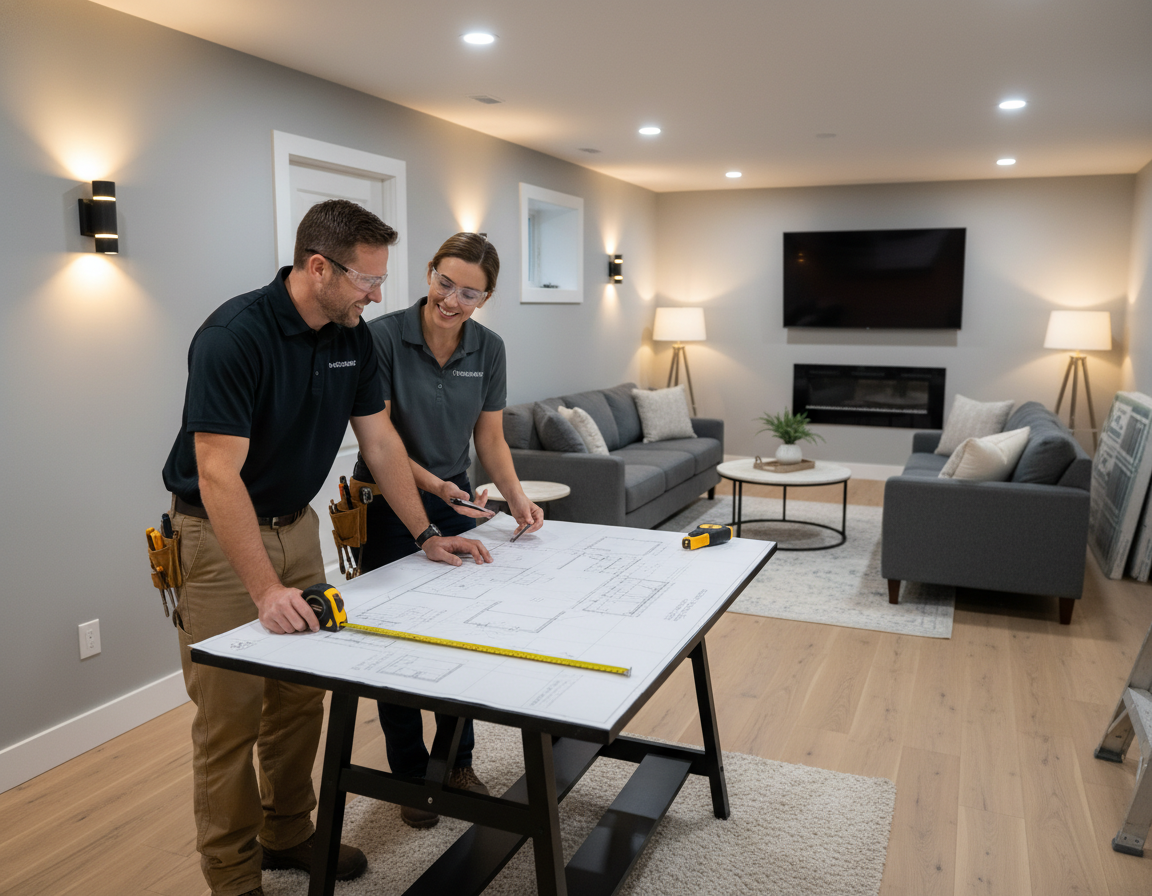
Enhancing a basement begins with verifying waterproofing, proper drainage, and code-compliant egress. Structural changes or repairs to the foundation are determined early to avoid surprises. Final steps often involve finished ceilings, upgraded lighting, and installed flooring. Accounting for moisture management and code-compliant exits is critical when setting the budget.

ADU Services and Home Additions

Building an accessory dwelling unit (ADU) involves reviewing zoning rules, obtaining permits, and having architectural plans approved. Selecting an ADU contractor who offers design-build services can simplify the entire process. These projects frequently include structural changes, utility connections, and planning site access routes. Getting all permit documentation in order makes inspections smoother.

Commercial Work and Tenant Improvements

Commercial construction and tenant improvement projects require detailed planning, owner coordination, and strict adherence to codes. Improvements may involve new HVAC systems, updated electrical work, accessible pathways, and enhanced fire safety. In Washington, commercial contractors manage permits, jobsite logistics, and phased schedules to minimise impact on daily operations.

Project Type Typical Phases Key Risks Where a Pro Helps
Kitchen remodeling WA Design → Demo → Cabinets/Countertops → MEP upgrades → Finish Hidden structural work, appliance fit issues, and permit delays Layout optimization, electrical/plumbing coordination
Bathroom remodeling WA Plan → Demo → Plumbing/Vent → Tile/Waterproof → Final Waterproofing failures, code noncompliance, ventilation issues Code guidance, waterproofing best practices, permitting
Basement remodeling WA Inspection → Waterproofing → Framing → Systems → Finish/flooring installation WA Moisture, foundation fixes, missing egress Early inspections, drainage solutions, structural design
ADU contractor services Zoning & Design → Foundation/Structure → Utilities → Final Finishes Zoning denial, utility constraints, permit complexity Coordinating design-build, preparing permit documents, and planning the site
Commercial/Tenant improvements Assessment → Phased Construction → System Upgrades → Handover Business disruption, code upgrades, phased scheduling Owner liaison, phased scheduling, full permitting

Hiring Process and Practical Steps to Launch Your Project

Starting a remodel can seem like an overwhelming task. A well-defined plan helps you communicate effectively with a general contractor in WA. It sets clear expectations for cost, schedule, and quality.

How to prepare before contacting contractors

Begin by clarifying your renovation goals, available budget, and target timeline. Collect inspiration photos and any building plans you have. Next, post your project details or shortlist 3–5 firms to evaluate. Doing so helps you compare offers from remodeling contractors in Seattle and nearby regions.

Questions to Ask at Site Visits and Contractor Interviews

Inquire about their business longevity, project workload, and knowledge of local codes. Learn who will be overseeing your project on a daily basis. It’s vital to know their communication policy, their methods to protect your home, and how they address delays or surprises.

Insist on seeing a Washington State contractor license, insurance details, and bond info. Ask for references and recent project photos from firms such as Jackson Design Build or DR Construction. This helps confirm their quality and client satisfaction.

Collecting and Comparing Bids

Allow yourself 1–2 weeks to gather detailed quotes. Check that each proposal clearly outlines scope, exclusions, materials, schedule, and change-order rules. Use a checklist to ensure you’re comparing bids fairly, prioritizing clear, detailed proposals over just the price.

Steer clear of bids that are extremely low, missing details, or from contractors who communicate poorly. In WA, the best-rated contractors usually submit detailed, itemised plans and realistic schedules that match your goals.

Contract Signing and Project Kickoff

The contract should spell out everything: scope of work, milestones, payment schedule, dispute resolution, warranty details, and how your property will be protected. Make sure it states who is responsible for permits and includes a pre-construction meeting agenda.

After you sign, you’ll usually pay a deposit so materials can be ordered and the schedule can be set. Keep a copy of the contract, insurance certificate, and contractor license for your records.

Conclusion

Hiring skilled general contractors in WA brings significant value to a wide range of projects. This covers kitchen remodels, bathroom renovations, basement transformations, flooring work, ADU construction, and more. Working with these professionals minimizes risks, expedites permitting processes, and safeguards your investment. They accomplish this by offering warranties and carrying comprehensive insurance coverage.

In selecting leading builders in Washington, evaluate reputation, portfolio depth, and permit handling experience. Look at companies such as Jackson Design Build for evidence of long-term client relationships. Likewise, consider DR Construction for their strong permit knowledge and site management around Bellevue. Follow approaches akin to Sweeten’s for fair cost and scope comparisons.

Prior to kicking off your project, define your goals clearly and assemble all needed documents. Make sure to verify the credentials of your chosen contractor. It is also crucial to have a formal contract. That contract should outline project timelines, any warranties provided, and the insurance protections in place.

If you’re seeking comprehensive services, Renovate Builders is an excellent local choice. They handle both residential and light commercial work skillfully, focusing on detailed permitting and client-focused project management. When you follow these steps, you’re more likely to hire top-tier contractors and commercial builders in Washington. They’ll work to ensure your project remains high quality, on time, and within your budget. Ultimately, a careful selection process helps turn your renovation plans into reality and supports predictable, successful results.

How 5/16 Stainless Steel Tubing Enhances Fluid Transfer Systems

Premium 5/16 Stainless Steel Tubing Supplies

Here we highlight high-grade 5/16 stainless steel tubing for US-based customers. These buyers depend on 5 16 stainless steel tubing for both industrial applications and hobby or leisure projects. Well-known names such as CYIWPH, Allstar, and Tynulox actively serve this market with 5/16 stainless steel tubing. Common offerings consist of Type 304 welded coils plus straight 304 tubing lengths.

Most standard options feature a 5/16″ outside diameter with .020 inch wall choices. The materials commonly used are grades 304 and 316. The price for 304 coils varies, while 316 often has stricter stocks, impacting long-term project planning.

Distributors such as Installation Parts Supply focus on industrial-grade and custom tubing solutions. E-commerce listings, including Amazon, demonstrate how these items are packaged and shipped. Coils are neatly packed for shipping, and straight lengths come with rapid delivery promises. Details like product weights, parcel sizes, and ASIN references assist buyers on retail sites.

5/16 stainless steel tubing

Key Takeaways

  • 5/16 Stainless Steel Tubing is available in coil and straight formats for versatile use.
  • Type 304 is commonly available; Type 316 can be less available and more expensive.
  • Premium 5/16 tubing commonly comes with .020 wall options for industrial-duty tubing.
  • Installation Parts Supply offers wholesale and custom stainless metal tubing options.
  • Check product listings for parcel dimensions, weight, and customer ratings before buying.

Why Choose Premium 5/16 Stainless Steel Tubing

Starting with the material choice, stainless steel’s corrosion resistance makes it a top pick for many applications. This includes fuel lines, HVAC systems, and marine use. Many buyers choose 304 stainless steel because of its broad utility. For environments or applications where chloride exposure is a concern, 316 is the go-to for its enhanced performance.

Stainless steel tubing brings clear material benefits. 316 stainless, for instance, is especially resistant to pitting and crevice attack in chloride-rich environments. Meanwhile, 304 stainless provides excellent weldability and machinability. This flexibility allows for a single stainless steel tube to fulfill varied roles within a project, avoiding early replacement needs.

When it comes to industrial tubing, benefits like dimensional stability, consistent wall thickness, and resistance to surface degradation stand out. High-grade 5/16 stainless steel tubing helps guarantee tight-fitting connections. It also helps limit leak risks while sustaining efficient flow in operating systems.

Investing in higher-grade tubing can substantially cut maintenance and downtime over the life of a system. While 316 stainless may have a higher starting price and sometimes tighter availability, its durability and reduced need for replacement offer better project economics. Opting for corrosion-resistant tubing from the start can also decrease overall costs for long-term installations.

Factor 304 Stainless 316 Stainless
Typical use cases Fuel lines, HVAC, general instrumentation Marine circuits, heavy chloride exposure, chemically aggressive settings
Corrosion resistance Good for most environments Excellent, particularly under chloride attack
Availability for 5/16 size Widely available in coils and straight tubing Sometimes limited; can be sold out for specific coils
Cost impact Lower upfront cost Higher upfront cost but lower replacement needs
Best choice when Budget-sensitive projects with moderate exposure Systems require maximum corrosion resistance

5/16 Stainless Steel Tubing: Specifications and Common Configurations

5/16 stainless steel tubing is compact but highly versatile, well-suited to fluid transfer and light structural duties. Its outside diameter of 0.3125 inch is ideal for routing in tight areas. Prior to purchase, confirm the tubing’s specs are compatible with required pressure, bend radius, and end-use conditions.

The strength and flexibility of this tubing change according to wall thickness and overall dimensions. You can find wall thicknesses like 0.020 in, 0.028 in, and 0.049 in from suppliers. For Type 304 and Type 316 stainless steel, coil configurations often use 5/16 OD paired with .020 wall thickness. Straight lengths are available from 12 to 96 inches.

Coiled tubing is excellent for snaking through tight routes and bends. In contrast, straight lengths are ideal for straight runs and simple structural lines. Coil lengths typically extend to 25 ft and 20 ft, chosen often for easy installation and fewer connections.

Different material grades are matched to different corrosion-resistance and fabrication requirements. Type 304 stainless steel is common for its corrosion resistance, weldability, and affordability. Type 316 offers better protection against chloride and harsh chemicals, suited to marine installations and any system with notable salt or chloride presence.

In supplier catalogs, you’ll find options for both welded and seamless tubing. Online markets frequently carry welded 304 coils. For higher pressure or aesthetic demands, you can purchase seamless round tubing and welded straight lengths. Make your tubing choice by evaluating pressure limits, finish preferences, and forming plans.

Fabricators often point out the slight differences between Type 316 and 304’s machinability. When forming small-diameter tubing, account for wall thickness and how it affects springback and potential wrinkling. Compression fittings and AN/flare adapters are widely used for connecting 5/16 tubing in various systems.

The versatility of this tubing is evident in its numerous applications: from automotive fuel lines to HVAC and marine systems. For food and pharmaceutical projects, select tubing that meets the specific regulatory standards.

Attribute Typical Options Notes
Outside diameter 0.3125 in (5/16″) Standard nominal size for compact systems
Wall thickness 0.020, 0.028, 0.049 in Thin walls ease bending; thicker walls improve pressure capabilities
Material grades Type 304, Type 316 304 for general use; 316 for marine and chloride exposure
Form factor Coils (20–25 ft), Straight (12–96 in) Coils help cut joint count; straight runs work best for rigid layouts
Manufacturing Welded vs seamless tubing Welded is typical for coils; seamless is favored for high pressure and clean aesthetic
Common fittings Compression, flare, AN adapters Widely available in hardware and specialty suppliers

Buying High-Quality 5/16 Stainless Tubing and Coil Options

Locating reliable suppliers of 5/16 stainless steel tubing helps streamline projects by guaranteeing precise dimensions and traceable products. Here are tips for bulk buying, identifying retail coil choices, and using a checklist to validate stainless tubing.

Use wholesale distributor channels when you have ongoing supply requirements or need specialized custom runs. Installation Parts Supply, located in the U.S., is a well-known distributor that provides a wide range of industrial tubing. They supply cut-to-length tubing as well as coiled and straight products. Purchasing from a wholesaler usually results in better volume discounts, guaranteed material traceability, and excellent customer service for technical specifications and tailored needs.

Retail coil options are ideal when projects are small in scope or timelines are tight. An example is the CYIWPH 5/16″ x 25 ft 304 welded coil available on Amazon, which has garnered positive feedback. Catalogs detail prices for 5/16″ 304 coils starting at $34.99 to $123.99, and 316 coils vary between $46.99 to $149.99, depending on availability. The availability of Type 316 can fluctuate significantly, making regular stock checks important.

Apply this quick checklist to reduce the risk of expensive errors when purchasing stainless tubing:

  • Confirm outside diameter (0.3125″) and selected wall thickness (.020, .028, .049).
  • Verify welded versus seamless construction for your application.
  • Decide between coil length and straight-cut lengths based on handling and installation needs.
  • Request mill test reports or material certificates (MTRs) for traceability and grade verification.
  • Check OD and wall tolerances, finish, and compatible fittings availability.
  • Review shipping and pickup policies; many suppliers ship next business day for orders placed before 3pm.
  • Compare pricing by coil length and wall thickness to find the best cost-per-foot.

Suppliers like Metals ‘R’ Us often provide MTRs upon request. If your project needs chloride resistance, ensure your supplier has Type 316 in stock. When researching where to buy 5/16 stainless steel tubing, weigh wholesale distributor advantages against retail coil flexibility to satisfy both budget and schedule.

To avoid regret, take time to scan customer ratings and confirm product dimensions before placing an order. Installation Parts Supply and other notable vendors usually give technical support on specifications to help ensure selected fittings and components are compatible with your tubing.

Guidance for Corrosion Resistant Tubing and Material Selection

Selecting the correct tubing begins with understanding both the application and the operating environment. Corrosion-resistant tubing preserves system performance when conditions are damp, saline, or chemically harsh. For small-scale projects and specific lines, 5/16 stainless steel tubing is preferred due to its strength and compactness. Selecting the right material minimizes downtime and costs over time.

Choosing between common stainless grades

Grade 304 is a favorite for numerous industrial and indoor applications, delivering solid corrosion resistance at a modest cost. In scenarios involving chloride, seawater, or harsh chemicals, grade 316 is the better choice, thanks to its molybdenum content that combats pitting and crevice corrosion. Budget considerations and availability are important — 316 typically costs more and may be harder to find. It’s crucial to weigh the differences between 304 and 316 stainless steel when choosing fittings, particularly for critical uses with 5/16 stainless steel tubing.

Environmental factors that shorten tubing life

Salinity, chlorides, and exposure to chemicals can lead to localized corrosion. Corrosion speeds up when temperatures rise. Mechanical abrasion and contact with different metals can produce wear and promote galvanic corrosion. For environments prone to chloride-induced deterioration, 316 is recommended. Effective selection of tubing materials takes all these conditions into account prior to installation.

Maintenance and preventative measures

Maintenance practices, including regular inspections and cleanings, make it easier to detect corrosion early. To minimize damage risks, select compatible fittings and follow proper installation techniques. It’s essential to avoid direct contact between stainless tubing and incompatible metals. This can involve using dielectric fittings to avoid galvanic corrosion. In food or pharmaceutical applications, ensure cleanliness and compatibility by requesting mill test reports and checking the surface finish before procurement.

Best practices table for material and upkeep

Issue 304 Recommendation 316 Recommendation Maintenance Tip
General indoor corrosion Good performance and cost-effective Over-specified; use only if needed Seasonal visual inspection and wipe-down
Marine or chloride exposure At risk of pitting and crevice corrosion Preferred for pitting resistance Rinse with fresh water and inspect crevices
Chemical contact Acceptable for mild chemicals Better for chloride and aggressive agents Verify chemical compatibility and MTRs
Mechanical abrasion or bending Good ductility for bends Similar formability; choose based on environment Use correct bend radii and avoid kinks
Sanitary or food/pharma Often acceptable with polished finish Preferred for higher hygiene demands Confirm surface finish and MTRs before use

Final selection checklist

  • Match the grade to exposure: test 304 vs 316 stainless steel for your site.
  • Confirm availability for 5/16 stainless steel tubing when ordering long runs.
  • Plan maintenance stainless tubing routines: cleaning, inspection, and fitting checks.
  • Request mill test reports and verify surface finish for sanitary or high-risk uses.

Custom Tubing Solutions, Fabrication, and Compatibility

Custom tubing solutions significantly impact projects requiring exact fits and traceable materials. Suppliers offer a diverse set of services surrounding 5/16 stainless steel tubing. This includes cut-to-length sections, mandrel bends, and end-forming services. These services help minimize site labor and speed up installation for fuel, instrumentation, and hydraulic assemblies.

Cut-to-length tubing offers the fastest way to get installation-ready parts. Common formats include straight 12″ segments and coils. Fabricators like Metals ‘R’ Us, alongside wholesale distributors, supply cutting, flaring, and coiling options. It is crucial to choose services that clearly document OD and wall thickness tolerances.

Fittings compatibility plays a critical role in maintaining long-term performance. For 5/16 stainless steel tubing, the primary choices are compression and flare fittings. It’s essential to pair stainless fittings with stainless tubing to prevent galvanic corrosion. Several marketplaces feature a variety of adapters, including AN-to-flare and flare-to-compression, designed for fuel and instrumentation line service.

When ordering custom tubing, one must be mindful of minimum order quantities and lead times. Companies like Installation Parts Supply note standard order cutoff times—commonly about 3 pm—for next-day pickup. Orders requiring custom specifications or certifications often have longer processing times and minimum order thresholds. It is wise to confirm lead times, shipment methods, and documentation requirements before completing your order.

Quality assurance and certification are paramount for regulated projects. A mill test report (MTR) verifies tubing grade and composition for each production batch. Documented inspections should show whether tubing meets stated OD and wall tolerances. Reliable suppliers supply MTRs on request and maintain the traceability needed for aerospace, medical, or petrochemical sectors.

Summary

Stainless steel tubing measuring 5/16 inches (0.3125″ OD) delivers both durability and corrosion resistance, making it suitable for many different projects. You can find common wall thicknesses like .020, .028, and .049 in both 304 and 316 stainless steel types. Depending on your project’s requirements, you can select from coils or straight lengths, and opt for either welded or seamless designs.

Engaging a wholesale distributor, such as Installation Parts Supply, offers benefits like access to premium tubing, full material traceability, and ready mill test reports. They also provide tailored tubing options, from cut-to-length services to specific coil configurations. It’s crucial to double-check OD and wall tolerances, grade selection, form (coil or straight), and delivery terms before you buy.

To get the best long-term value from your selection and maintenance efforts, opt for 304 grade for typical industrial use. However, for areas with high chloride presence or marine settings, 316 grade is recommended for its enhanced resistance to corrosion. Ensuring correct bending, using compatible fittings, and conducting regular inspections for wear can significantly prolong the tubing’s lifespan and minimize costs over time.

For buyers in the U.S., it’s wise to look at Installation Parts Supply when you want competitive wholesale pricing and tailored tubing services. Make sure the 0.3125″ OD, wall thickness, and chosen grade align with your requirements. Request mill test reports if needed, and decide whether coils or straight lengths, along with suitable fittings, fit your project’s requirements.

SEO Optimization Medford Oregon To Strengthen Internal Linking

Get Affordable SEO in Medford Oregon Today

What if your local business could appear at the top of search results when potential customers in your area are looking for exactly what you offer?

For companies operating in Southern Oregon, establishing a strong online presence is no longer optional. This is vital for capturing local customers and keeping ahead of competitors. Digital competition makes visibility in key areas indispensable when leveraging a SEO optimization Medford Oregon.

Marketing1on1.com acts as a trusted partner for companies that want measurable outcomes. Backed by more than twelve years of experience since 2014, this registered digital marketing company focuses on search engine optimization tactics that fuel genuine growth.

They implement forward-thinking tactics that strengthen website visibility on search platforms. The services they offer produce targeted leads and yield a measurable return on investment for a broad range of businesses.

In the past, many small and mid-sized businesses considered premium digital marketing services too expensive. Marketing1on1.com helps make professional SEO realistically accessible for these organizations.

Partnerships with this experienced company yield immediate benefits. Businesses usually experience higher traffic, better conversion rates, and an increase in revenue. The team stays ahead of algorithm changes to maintain competitive advantages.

This in-depth guide explains the services, implementation tactics, and concrete results companies can anticipate. You’ll discover how proper optimization reshapes your online presence and drives lasting success.

professional SEO Medford Oregon

The Importance of Affordable SEO in Medford Oregon

Most modern buyers begin by searching online, so strong search visibility becomes critical for business expansion. Local enterprises face intense competition when potential clients search for products and services.

Enhancing Visibility and Traffic

Professional search optimization supports businesses in distinguishing themselves in saturated digital spaces. As a site climbs higher in search listings, it gains noticeably more visits and engagement.

These extra visitors are people already looking for particular answers or services. Marketing1on1.com targets local search opportunities designed to attract relevant local visitors.

Driving Quality Leads and Revenue Growth

A stronger online presence draws in customers who are ready to buy. These warm, targeted leads are more likely to convert than those reached through traditional ads.

Businesses experience compounding returns as their digital authority strengthens over time. Search engine optimization spending delivers sustainable outcomes without overwhelming advertising costs.

Meet Marketing1on1.com: Your Dedicated Medford SEO Partner

When businesses seek to improve their search engine rankings, they need experienced professionals who understand the evolving landscape. Marketing1on1.com brings over twelve years of specialized expertise to the table.

Company Expertise and Proven Track Record

This officially registered digital marketing firm has helped thousands of clients since 2014. Their team approach provides comprehensive support across diverse industries.

Unlike working with individual consultants, clients benefit from multiple specialists collaborating on their campaigns. The company’s leadership has contributed to industry publications and appeared at conferences as speakers.

SEO Plans Customized for Local Market Conditions

Marketing1on1.com builds individualized SEO plans based on each business’s needs. They are familiar with the competitive and local nuances of the Medford region.

Their SEO strategies tackle concrete competitive challenges and still connect with local customers. This level of customization helps produce sustainable results over time.

The fact that many clients stay for years highlights the strength of their long-term partnership structure. Businesses trust their guidance through algorithm changes and market shifts.

Affordable Medford SEO: Changing the Future for Local Companies

Many businesses discover too late that shortcuts in digital marketing can lead to devastating consequences for their online presence. Marketing1on1.com focuses on sustainable strategies that create real authority instead of short-lived gains.

Ethical SEO Tactics for Long-Term Stability

White-hat methods follow search engine guidelines to protect clients from penalties. Black-hat methods might deliver short-term gains but can permanently harm your rankings.

Marketing1on1.com is dedicated to developing content that genuinely answers user needs. They secure backlinks by building authentic relationships rather than buying links.

“Genuine SEO depends on patience and ethical methods—there is no magic button for lasting success.”

Some agencies hide behind vague “proprietary methods” that can conceal risky tactics. Here, every tactic is explained plainly so clients stay informed about all SEO efforts.

Creating Sustainable Long-Term Online Visibility

Doing SEO the right way leads to value that grows steadily over the long term. Websites build trust with search engines, establishing sustainable visibility that lasts for years.

Most businesses begin seeing initial gains in roughly three to six months. Larger gains usually show between six and twelve months as authority strengthens.

This patient, methodical approach builds a foundation for long-term growth. It helps businesses avoid boom-and-bust cycles caused by risky shortcuts that threaten whole marketing budgets.

Customized SEO Services Designed Around Your Business Needs

Successful online visibility begins with understanding what potential customers are actively searching for. Marketing1on1.com builds tailored strategies that reflect the unique requirements of each business.

Their strategy unites multiple specialised methods into a single cohesive plan. Such an integrated strategy ensures that every important part of SEO is addressed.

Finding the Right Keywords and Optimising On-Page Elements

Detailed keyword research reveals the exact phrases your audience is using. Their team studies search patterns to uncover profitable opportunities.

Findings from this research fuel strategic on-page improvements across all important elements. They refine title tags, meta descriptions, and the way your headers are structured.

Internal link structures and image alt text also get careful attention. Every adjustment maintains natural readability while signaling relevance to search engines.

Content Strategy Combined with Technical SEO

Creating strong content allows you to address the exact questions your audience has. Their team produces informative materials that help establish your authority.

Technical SEO enhancements make sure search engines can crawl and index your website correctly. Services include speed optimization and mobile responsiveness.

Combined, these factors contribute to sustainable search presence. The company tailors the service combination based on your current website status and competitive environment.

Local SEO Solutions for Medford and Surrounding Areas

For businesses that serve specific geographic regions, showing up in local search results can be the difference between being found or being ignored. Marketing1on1.com works to connect local enterprises with people in their vicinity who are searching for their solutions.

Their process starts with a comprehensive Google Business Profile optimisation. They refine your listing so it has correct information, compelling copy, and strategically placed keywords.

Optimising Google Business Profiles and Local Citations

The team oversees local listings in dozens of online directories and citation platforms. Consistency signals legitimacy to search engines and prevents conflicting information for potential customers.

They employ location-based keyword strategies that focus on “near me” searches and area-specific phrases. This method helps your business show up for searches that clearly indicate local intent.

Review generation strategies help accumulate positive customer feedback on relevant platforms. Such feedback shapes buyer decisions and contributes to stronger local search performance.

Strong local SEO links businesses with high-intent customers exactly when they need help. This results in phone calls, direction requests, and website visits from people ready to make purchases.

Marketing1on1.com understands how competitors operate across the broader region. Their team finds openings that allow local enterprises to overtake rivals and grow their share of the market.

What SEO Really Costs and the ROI You Can Expect

Savvy businesses know that digital marketing investments must be evaluated in terms of cost versus return. Professional SEO packages for SMEs often fall between $500 and $5,000 each month, depending on complexity.

Pricing is influenced by how competitive your industry is, how large the project is, and the expertise of your provider. Marketing1on1.com offers packages that adapt to various budgets without sacrificing quality.

How to Evaluate SEO Pricing Structures

They offer both monthly retainers for continuous optimisation and project-style pricing for one-off projects. Key cost drivers include the state of your website, your geographic targeting, and the breadth of services included.

Very competitive industries usually need more intensive SEO work. Sites with technical issues may need additional upfront work.

“Bargain SEO can be costly when old tactics ruin the rankings you rely on.”

Long-term Benefits and Value of Expert SEO

Specialist SEO work creates lasting value through more organic traffic and better conversions. Many companies notice measurable gains in the first three to six months.

As your authority deepens, significant returns generally show up between six and twelve months. The investment pays for itself through reduced dependency on paid advertising.

Marketing1on1.com delivers detailed monthly reports that highlight traffic growth and revenue impact. These reports help clients view SEO as a strategic investment instead of just a cost.

Reliable Strategies for Better Search Engine Positions

Building sustainable search engine rankings requires more than just technical adjustments to your website. Marketing1on1.com uses tested strategies that unite authority-building with engagement-focused tactics.

Quality Link Building Paired with Content Marketing

They emphasise high-quality links instead of chasing large volumes. By leveraging trusted relationships, they earn links from reputable websites.

The strategy strengthens your site’s reputation while staying safely within search guidelines. Their ethical approach includes tactics like:

  • Developing detailed guides that draw organic backlinks
  • Guest posting strategically on relevant industry sites
  • Running digital PR campaigns that secure media coverage
  • Cultivating relationships with businesses that complement your services

Content marketing powers both direct rankings and link-earning efforts. The team produces content that speaks to audience concerns and offers solutions.

High-quality content serves multiple purposes simultaneously. It boosts keyword rankings and draws in worthwhile backlinks.

Search engines view quality backlinks as votes of confidence. Those signals suggest your content should appear more prominently in search.

This style of strategy supports rankings that remain stable through updates. This approach showcases genuine expertise and authority.

Marketing1on1.com’s methods have consistently delivered results across diverse industries. Over more than a decade, they’ve refined their strategies to match ongoing search engine changes.

Our Expert Team: Data-Driven SEO That Drives Measurable Growth

Successful search optimisation is about more than technical skills—it depends on a collaborative team of experts. Marketing1on1.com brings together experienced professionals who collaborate on each client account.

Their team includes technical consultants, content strategists, link building experts, and local specialists. Multiple perspectives ensure comprehensive solutions for each client’s unique needs.

Ongoing Monitoring and Strategic Refinement

The team grounds all decisions in clear performance metrics. They constantly review rankings, traffic patterns, and visitor behaviour.

Regular performance reviews reveal which strategies are delivering the strongest results. Strategy changes are implemented promptly in response to the data.

This process ensures that optimisation efforts stay effective over the long term. Month after month, clients can see measurable forward movement.

Staying Current with Algorithm Updates

They keep a close watch on search engine news and industry developments. They run ongoing tests across their client portfolio to validate strategies.

Monthly reporting highlights genuine progress using meaningful metrics. You receive explanations in clear, plain language rather than technical jargon.

Transparency is a defining feature of their client relationships. Compared with a lone account manager, their collaborative approach typically yields stronger outcomes.

Conclusion

The move toward improved digital results begins with one action. For any business in today’s marketplace, a solid online presence is essential for reaching local customers.

Marketing1on1.com stands as the ideal partner for this mission. Armed with more than twelve years of experience, this company offers comprehensive seo services that generate real results.

Their expert team covers everything from technical clean-up to content production. Such services assist your website to rank higher while bringing additional website traffic.

Waiting too long can mean losing ground as your competitors progress. Now is the best time to enhance your search visibility.

Reach out to Marketing1on1.com today for a no-cost consultation. Discover the perfect strategy to meet your business needs and achieve sustainable growth.

Combining Lidar Components And Co Packaged Optics For Intelligent Infrastructure

Precision LiDAR Components for Next-Generation Mapping

Notable fact: Across the United States, infrastructure surveys increasingly reuse airborne scanning data, reducing field time by more than 60% on many projects. This guide shows how to pick a https://amt-mat.com/precision-manufacturing-for-lidar-components-and-co-packaged-optics stack that meets real-world mapping needs across the United States.

We explain how to evaluate components, systems, and integration so professionals can specify a stack for modern mapping. You will see how laser modules, optics, electronics, and software come together to capture data suitable for geospatial and infrastructure projects.

Lidar components

Follow an end-to-end workflow from planning through deployment and QA, including clear guidance on scanning parameters, detection thresholds, and timing decisions that influence accuracy and overall information yield. There is also practical direction on budget planning, performance tiers, and growth strategies so solutions progress from pilot to production without needing a complete system swap.

We define key terms, preview safety and compliance for eye-safe laser classes, and map common deployment contexts — from corridor and city mapping to construction and utilities. When you finish, surveyors, engineers, operators, and fleet partners will be better prepared to make justified selections that limit rework and accelerate time-to-field.

Main Takeaways

  • Methods for evaluating components and full systems for U.S.-based mapping projects.
  • How lasers, optics, electronics, and software interact to capture usable mapping data.
  • Workflow steps from planning through QA that shape data quality.
  • Budget planning, upgrade options, and trade-offs linking cost, performance, and time-to-field.
  • Safety, interoperability, and common deployment contexts to guide early decisions.

Understanding Precision LiDAR Components and Key Mapping Requirements

Good mapping starts with clear roles for each hardware piece: how the beam is made, steered, timed, and protected in the field.

Key Components and Their Roles

A laser source generates controlled laser pulses for the system. A scanner or beam-steering module moves the beam across the scene. Receiver modules and optical elements gather returned energy and transform it into measurements.

A dedicated timing and synchronization unit tags each return with accurate timing information. An environmental sensor housing protects optics from dust, vibration, and weather.

Turning Pulses into a Point Cloud

Laser light leaves the source as short pulses. The pulses impact surfaces and travel back to the receiver. Electronics measure the time-of-flight and signal amplitude. Processing pipelines transform these measurements into georeferenced point data, building the point cloud.

System Element Primary Benefit Key Trade-offs Practical Notes
Laser module Beam quality and usable range Balancing output power with eye safety Select wavelengths that match target reflectivity
Scanner type Coverage, FOV Mechanical motion versus reliability Solid-state lowers maintenance
Receiver Ability to detect low-intensity returns Cost vs. sensitivity Higher gain supports darker surfaces
Timing & housing Measurement accuracy and stability Weight and thermal needs A robust enclosure helps maintain calibration over time

In remote sensing, the selected wavelength influences range, reflectivity, and eye-safety characteristics. Balance timing precision, detector sensitivity, and survey speed to meet accuracy and coverage targets with https://amt-mat.com/business/mim/ceramic-injection-molding/.

Choosing Precision LiDAR Components for Your System

First set measurable goals for the survey area, target objects, and the distances that drive system choices.

Clarify application goals: document the mapping area, primary objects, expected ranges, and environmental constraints. Doing this helps you choose appropriate sensors and check acceptance criteria for your applications.

Scanner and Beam-Steering Choices

Select scanning or beam-steering approaches according to coverage requirements and model fidelity needs. Mechanical scanner designs offer broad field coverage. Solid-state solutions reduce mechanical complexity for ground vehicles and aerial platforms.

Managing Receiver Noise and Timing

Review receiver sensitivity and noise handling so you retain low-level returns. Verify detection thresholds and front-end design so measurements remain stable in bright or low-signal environments.

Integration and Data Throughput

Choose synchronization schemes (PPS or PTP) to keep lidar timestamps aligned with GNSS/INS and camera data. Match throughput to storage and processing so data flows without gaps during long surveys.

  • Develop a requirements matrix that connects area, target types, working distances, and outputs to clear acceptance metrics.
  • Specify lasers and optics to match reflectivity and operating temperature ranges while maintaining eye-safe margins.
  • Confirm mechanical fit, power needs, and thermal design on vehicles and aerial platforms.
  • Define calibration procedures, redundancy levels, and data formats so analytics teams receive clean inputs.

How to Validate, Secure, and Deploy on Vehicles and Aerial Systems

A structured validation plan removes guesswork and helps keep surveys inside accuracy limits. Start by confirming alignment and timing before any production run.

Calibrating Your System

Conduct boresight alignment between the lidar, GNSS/INS, and cameras. Run measurement checks against ground control and compare known features to confirm range and angular accuracy.

Include vibration characterization tests and range checks for vehicle and aerial configurations. Log results and stamp each unit as field-ready before collection starts.

Laser Safety and Regulatory Compliance

Choose eye-safe lasers and clearly label each enclosure. Train field teams on light detection and ranging procedures and maintain operational logs to demonstrate compliance during audits.

Applied fleet scenarios

Use standardized mounting kits, power routing, and quick-release hardware so lidar equipment can be attached to vehicles quickly.

Schedule routes, set collection speeds, and rotate storage so each system meets accuracy thresholds while maximizing coverage per shift.

  • Calibration workflow steps: boresight, measurement checks, and verification against control points.
  • Safety plan: eye-safe configurations, labeled enclosures, operator training, and documented audit logs.
  • Validation: run vibration testing, range checks, and day/night detection validation.
  • Fleet model: standardized mounts, power, and rapid install/removal.
  • Monitoring & QA: system health logging, automated trajectory workflows, strip-to-strip alignment, and differencing against control points.
Use Primary Validation Outcome
Vehicle mapping Testing vibration response and mount stability Stable measurements at roadway speeds
Aerial mapping missions Range & timing sync check Accurate georeferenced point data
Urban and highway environments Trials focused on reflectivity and occlusion effects Mitigation of multipath issues and clearer returns

Document procedures and train drivers and technicians to resolve routine issues and escalate quickly. Maintain a governance checklist covering briefings, route permissions, incident reporting, and data retention so operations remain safe and auditable.

Wrapping Up

Finish by defining a practical plan that helps teams progress from https://amt-mat.com/medical-devices-assembly-process requirements to validated multi-platform data collection. Begin with a vendor-neutral requirements list and then compare at least two lidar systems in every category.

Balance light/laser choices, scanning strategies, and receiver configurations so you achieve mapping and detection objectives. Use timing discipline and sync to keep each lidar system producing consistent point and trajectory outputs for point cloud deliverables.

Pilot on a limited number of vehicles as in the example above: validate ranges and distances in different areas, apply the calibration and safety checklist, and then scale using defined maintenance and collection routines. With this disciplined approach, systems, models, and operations stay aligned, enabling teams to deliver reliable mapping solutions on schedule and within budget.

The Environmental Advantages Of Mass Timber Framing

Your Timber Framing Construction Partner: Earth-Bound Building

“The details are not the details; they create the design.” — Charles Eames

As a builder, you are about to see how Earth-Bound Building acts as your comprehensive partner in the United States for framing timber, project planning, design work, and build of a house or other buildings today.

Our team guides you from the initial call through estimating, shop cutting, pre-fit, and raising day. You’ll quickly understand how a timber frame differs from conventional framing and why frame construction boosts both overall performance and the aesthetic of exposed wood architecture.

Our process maps out the scope of your project, the services you’ll need, and how we adapt support for design, sourcing, fabrication, and on-site raising so you stay on time and on budget.

By the time you finish this section, you will know what to prepare for each stage, how priorities like energy, schedule, and craftsmanship guide your choices, and how hands-on craft meets engineering to protect quality and control risk.

timber framing company

  • You receive a clear roadmap from consult to raising day for your project.
  • Grasp what makes a timber frame unique and how the frame carries loads.
  • Find out which services and partners you’ll need to stay on schedule and budget.
  • Discover how beauty timber joinery builds lasting interior character.
  • Be confident about the next steps to request a quote and move forward with confidence.

Start Strong: How Earth-Bound Building Guides Your Timber Frame Project Today

Begin your project with a clear roadmap and a single, experienced contact who advises on every decision.

You start with a discovery call where an Earth-Bound timber framer reviews scope, budget, timeline, and regional rules in the United States that influence a timber frame build.

Then we provide a preliminary roadmap that outlines design deliverables, engineering needs, permitting steps, and when shop work will start so momentum gets underway right away.

Provide site plans, elevations, and soils notes early. Those tools and drawings speed pricing and limit change orders later.

Decisions are phased—species choice, bay layout, joinery level, and enclosure strategy—so each frame choice backs up performance and interior character.

  • A single point of contact manages communication and records milestones.
  • We coordinate with your GC, architect, and engineer to synchronize schedules and avoid duplicated work.
  • You receive a realistic cost range for materials, fabrication, shipping, and raising plus contingency allowances.

Before cutting, the build timber frame sequence plays out on paper: submittals, approvals, and shop drawings. You end the call with clear next actions and a draft agreement that locks in your position on our shop calendar.

Planning and Design Fundamentals for Timber Frame Construction

Good design begins with how a site defines your building’s spans, roof form, and daylight.

Site considerations, climate, and orientation in the United States

Evaluate snow loads, wind exposure, seismic zones, and solar orientation early. These factors determine roof pitch, glazing placement, and foundation needs for your project.

Earth-Bound helps translate regional code and climate into practical choices so the frame works efficiently year-round.

Timber Frame Design Basics: Spans, Bays, And Load Paths

Determine bay spacing and bent layout to control spans and deflection limits. Load paths move from rafters to posts, through joinery, and into the foundation.

Set target spans to avoid oversizing members while keeping comfort and structural integrity in balance.

Integrating home design aesthetics with structural integrity

Match window groups, stair locations, and ceiling planes with post rhythms to highlight the frame and simplify detailing.

“When design follows structure, you save time and keep budgets realistic.”

Lay out mechanical runs, choose enclosure materials, and define joinery tolerances before shop drawings start. This cuts down on on-site conflicts and keeps the build timber schedule on track.

Design Driver Common Approach Effect on Cost & Schedule
Large clear spans Use larger members or add concealed steel Higher material cost; longer fabrication time
Solar orientation Shift glazing and roof overhangs Reduces heating load; may simplify enclosure
Lateral resistance needs Braced bents, knee braces, or shear panels Impacts visible expression and detailing time

Choosing Timber: Species, Grades, and Sustainable Sourcing

Choosing the right species and grade defines the look for how your frame will look and behave for decades.

Common species and how they compare

You compare Douglas fir, white oak, eastern hemlock, and other local species for strength, color, and workability.

  • Douglas fir: strong, lighter, tool-friendly for fast woodworking.
  • White oak: durable and beautiful but harder to cut and finish.
  • Eastern hemlock and regional softwoods: cost-effective and widely available across the United States.

Moisture, Grading, And Long-Term Expectations

Moisture state and grade influence movement, checking, and fit in joinery.

Category Typical Condition Effect on Frame
Green High moisture, heavy More shrinkage and checking in first years
Air-dried Moderate moisture Balanced stability; good for joinery
Kiln-dried Low moisture Least movement; tighter fit and predictable finish
Grades No.1 & Btr., Select Structural Higher appearance and strength; fewer defects

Earth-Bound Building recommends sustainable sourcing—FSC or regional mills—to reduce lead times and carbon. Record species and grades in your contract so substitutions must be approved by you. Plan finishes like natural oils or low-VOC sealers to protect color and grain while preserving long-term performance.

Essential Tools for Framing: Hand Craft Meets Power Tools

A well-stocked shop and a clear tool plan keep a project moving from the first cut to raising day.

Core hand tools and layout gear

You rely on chisels, mallets, slicks, marking gauges, and squares for precise joinery. Sharp edges and consistent setup make fitting tenons and mortises efficient and repeatable.

Power Tools That Speed The Work

Chain mortisers, beam saws, and right-angle drills cut cycles without losing accuracy. Use power tools to rough out material, then finish by hand for fit and finish.

Safety, Staging, And Maintenance Essentials

Follow PPE, dust extraction, lifting protocols, and GFCI protection on site. Daily sharpening, cord checks, and blade swaps minimize downtime.

Category Common Items Benefit
Layout Story poles, reference faces, knife lines Consistency across benches and bays
Hand tools Chisels, mallets, slicks, squares Fine control for final fit
Power tools Chain mortiser, beam saw, drills Faster throughput; repeatable cuts
Site prep Weather-rated cords, GFCI, containment Safe, compliant onsite work

Earth-Bound Building equips your project with pro-grade tools, staged workflows, and checklists. Clearly document responsibilities so nothing critical gets left behind on raising day.

Joinery Methods: From Mortise And Tenon To Wooden Pegs And Beyond

Good joinery balances proportion with purpose so every joint is both strong and intentionally beautiful. Earth-Bound balances classic craft with modern engineering to give you joints that are reliable and buildable on schedule.

Classic Mortise-And-Tenon Geometry For Strength And Beauty

The mortise tenon form is time-tested and straightforward. You size tenon shoulders and cheek area for shear and bearing. Tight shoulders and clean arrises add the beauty timber look you want inside a home.

Shear, tension, and withdrawal: how joinery carries loads

Learn how loads move through a joint so you pick the right detail. Shear is carried across faces. Tension and withdrawal call for pegs, wedges, or hidden reinforcement.

Wooden pegs, draw-boring, and layout techniques

Wooden pegs lock a joint under compressive tension. Draw-boring offsets holes slightly so the joint tightens as you seat the peg. These methods give long service with simple hand tools and predictable results.

  • You learn proportions and where housings add bearing for longevity.
  • Layout techniques—reference faces, story sticks, and knife lines—ensure repeatability across pieces.
  • Decide when complex joinery pays off and when simplifying preserves schedule and structure.
  • Balance hand skill and jigs so woodworking tolerances stay tight without slowing production.
Method Why Use It Typical Use
Mortise and tenon Strong in shear and bearing; visible art craft Posts, beams, rafter ties in a timber frame
Pegged joints Clamp-free locking; durable with movement Primary bent connections and exposed pegs
Scarf & spline Join long members; maintain continuity Ridge beams, long plates
Concealed reinforcement Adds capacity where code or spans demand it High-load intersections or retrofit

You coordinate joinery with the timber framer’s bench flow so pre-fit, labeling, and packing keep raising day smooth. Small choices in layout and finish make the joinery read as intentional art, not an afterthought, in your building timber frame project.

Timber Framing Construction: From Shop Layout To Foundation

A disciplined shop layout and a coordinated foundation schedule make the difference between a smooth raise and a delayed job.

Shop Layout, Story Poles, And Reference Faces For Accuracy

You set a shop flow that moves material straight from receiving to layout, cutting, and pre-fit. Dedicated reference faces hold your datum so every member measures the same.

Story poles, templates, and consistent marking minimize fit problems. That saves time and protects structural integrity when the frame goes up.

Choosing and setting the right foundation

Schedule foundation work early and align piers, stem walls, or slabs to sill heights and anchor locations. Verify anchor bolts, sill prep, and bearing spots before shipping timbers.

Hold a foundation handoff meeting with your GC to confirm dates and tolerances. Fixing out-of-square conditions in the shop is faster than on site.

Topic Action Benefit
Shop layout Reference faces, straight flow Fewer measurement errors
Pre-fit & labeling Document joints, stage bents Faster raising day
Joinery prep Mortise tenon & wooden pegs setup Consistent fit, paced work
Site readiness Anchor check, crane path, laydown Execution without delays

Earth-Bound Building coordinates tools, jigs, packaging, and protection so your frame arrives ready to raise.

Raising Day: Assembling Frames, Bents, and Roof Systems

You’ll see how pre-fit, labels, and rigging choreography bring heavy members into clean, accurate alignment.

Staging, rigging, and crew roles for safe raising

You set the stage with a laydown plan that maps crane access, sling points, and storage zones.

Assign clear crew roles: signaler, rigger, tag-line handlers, and a lead who calls each pick.

Walk the team through lift plans and hand signals before the first move.

Pre-fitting, labeling pieces, and protecting the work

Verify labels, orientation, and pre-fit notes so pieces go from truck to hook without extra handling.

Assemble roof bays on the ground when possible to reduce aerial work.

Protect fresh joinery with tarps or temporary covers until the enclosure begins.

Common Roof Systems: Common Rafters, Purlins, And Trusses

Choose the roof approach that matches spans and use of the space—common rafters, purlins, or trusses.

Check plumb, level, and brace alignment as each bent stands and lock geometry before releasing rigging.

“A safe, efficient raise is planned in the shop and rehearsed on the ground.”

  • Coordinate crane time and deliveries to avoid delays.
  • Document peg setting and final torque for the closeout package.
  • Adapt sequence for barns or barn-style homes with long spans and lofts.

Enclosure, Weatherproofing, and Home Performance

Smart enclosure choices link the visible frame to high performance and long-term durability. Earth-Bound Building helps you pick systems that respect the joinery and keep your home comfortable in the United States.

SIPs, Curtain Walls, And Hybrid Enclosure Methods

Compare SIPs, site-built curtain walls, and hybrid approaches for speed, cost, and airtightness. SIPs often win on speed and R-value. Curtain walls give more flexibility for glass and custom home design.

Choose the method that preserves exposed posts and beams while meeting energy goals.

Air sealing, moisture control, and durability

Layer WRB, tapes, gaskets, and thermal breaks so joints and windows stay tight. Vent roof assemblies and continuous drainage planes move moisture away from wood members.

Coordinate sequencing so enclosure crews do not overload a fresh frame. Use compatible fasteners, sealants, and gaskets rated for UV and temperature cycles.

  • Plan insulation thickness and thermal breaks for your climate zone.
  • Integrate ducts and vents to avoid cutting primary members.
  • Pick interior finishes that let wood breathe while highlighting grain.

“Durable enclosures protect performance and showcase the frame as intentional architecture.”

Budget, Timeline, and Permitting for Building Timber Frame Projects

A realistic timeline begins when you pair line-item estimates with permit lead times.

Earth-Bound Building gives transparent estimates that show materials, shop work, transport, crane days, and raising labor so you can compare choices clearly.

Estimating materials, labor, and staging costs

You receive a detailed cost breakdown for lumber, fabrication, delivery, and on-site crew. This helps you see how larger spans or complex joinery change price and rhythm.

Plan allowances for staging: crane time, rentals, and laydown areas. Early material choices protect lead times and lock pricing.

Permits, inspections, and codes across the United States

We coordinate engineered drawings and site plans to speed permit review and inspections across the United States.

Expect time for plan checks, structural review, and scheduled inspections. Build allowances into your schedule for weather and agency timelines.

Item Typical Impact Scheduling Notes
Span increase Higher material + fabrication cost Longer shop lead time
Complex joinery More shop hours; skilled labor Pre-fit needed before delivery
Crane & staging Daily rental and crew rates Reserve dates; weather buffers
Permit review Variable by jurisdiction Start applications early

Assign responsibilities for tools, hardware, and site prep so your GC and our team align on who provides what.

“Transparent estimates and weekly check-ins keep your project on schedule.”

Workmanship That Lasts: Finishes, Care, and Maintenance

A simple maintenance routine preserves the art and function of your home’s exposed wood.

Select finishes that make upkeep easy. Choose penetrating oils, low-VOC sealers, or waxes to keep color true and to simplify touch-ups over the years.

Keep routine care gentle. Dust often, limit UV exposure with blinds or films, and control indoor humidity so joinery and finish stay stable. These steps protect structural integrity and the visible craft of the frame.

“Small checks now save large repairs later.”

Learn basic woodworking techniques for minor dents and scratches. Clean with products matched to your finish to avoid buildup or discoloration. Maintain metal fasteners and exposed hardware to prevent corrosion streaks on wood surfaces.

Schedule seasonal inspections at windows, doors, and roof penetrations. Watch for normal seasonal movement and know when to call your timber framer for advice or service.

  • Manage pests with screens and clean site conditions.
  • Control humidity with ventilation, dehumidifiers, or humidifiers by season and region.
  • Keep a maintenance log so future owners see the care history of the home and frame.

Conclusion

From initial sketches to the final peg, your project becomes a cohesive, buildable plan. You move from vision to engineered drawings, shop work, and a staged raise that protects structural integrity and reveals the beauty timber inside your home.

You see how methods like mortise tenon craft and careful frame design shape daily life. Foundation readiness, site staging, and available power make raising day safe and efficient. Species choices such as Douglas fir and white oak affect look, cost, and care.

When you’re ready, Earth-Bound Building is your trusted guide—from questions to raising day—so you build with confidence and enjoy a lasting timber frame. Contact us to start your design kickoff and site review with a dedicated timber framer.

FAQ

Q: What services does Earth-Bound Building provide for your timber frame project?

A: Earth-Bound Building offers full-service project support: design consultation, material sourcing, detailed shop drawings, on-site raising assistance, and post-build maintenance guidance. You’ll get help from planning through raising day so your home design and structural needs align.

Q: How does Earth-Bound Building help you start a timber frame project today?

A: They begin with a site and program evaluation, assess climate and orientation, develop preliminary layouts for spans and bays, and produce cost estimates. You’ll receive a clear timeline and recommendations for foundations, joinery, and finishes to keep your build on track.

Q: What site factors should you consider in the United States before building?

A: Consider local climate, sun path, prevailing wind, soil bearing capacity, and access for delivery and cranes. These affect foundation type, roof overhangs, insulation strategy, and moisture control measures that keep the frame durable.

Q: What are the basic design elements of a timber frame you should know?

A: Focus on spans, bays, and load paths. Spans determine beam and post sizing; bay layout affects interior flow; and clear load paths ensure forces travel safely to the foundation. Good design balances beauty with structural integrity.

Q: Which wood species are commonly used and why?

A: Douglas fir and white oak are popular for strength and appearance. Douglas fir offers good strength-to-weight and consistent grain, while white oak resists decay. Your choice depends on availability, budget, and the look you want.

Q: How important is moisture content and grading in your materials?

A: Very important. Proper moisture content reduces checking and movement after assembly. Grading ensures members meet structural requirements. Expect some seasonal movement; plan joinery and finishes accordingly.

Q: What core hand tools will you need for frame joinery?

A: Essential hand tools include chisels, mallets, slicks, layout squares, and marking gauges. These let you fine-tune mortises and tenons and achieve the fit and finish that make the craft distinct.

Q: Which power tools speed up timber frame work without sacrificing quality?

A: Circular saws, chain mortisers, band saws, and heavy-duty drills speed production. Used properly, they reduce labor while preserving the precision that hand finishing provides.

Q: What safety practices should you follow in the shop and on the jobsite?

A: Always use eye, hearing, and respiratory protection, lock out equipment during maintenance, secure loads for lifting, and follow fall-protection rules. Regular tool inspections and crew briefings reduce accidents.

Q: How do mortise-and-tenon joints carry loads in a frame?

A: Mortise-and-tenon geometry transfers shear and compressive forces through compact bearing areas, while tenon shoulders resist rotation. Properly sized joints and sound joinery detail keep connections performing for decades.

Q: What role do wooden pegs and draw-boring play in joinery?

A: Wooden pegs lock joints and allow slight movement without metal hardware. Draw-boring tightens the joint by offsetting the peg hole, creating compression that resists withdrawal and loosening over time.

Q: How should you plan shop layout and reference faces for accurate cutting?

A: Set clear reference faces and story poles before cutting. Organize a logical flow from milling to joinery to final labeling. Consistent references minimize cumulative errors and simplify fit-up on site.

Q: What foundation types suit frame buildings and how do you choose?

A: Options include full basements, crawlspaces, slab-on-grade with piers, or post-and-beam pads. Choose based on soil report, frost depth, and desired interior space. Your foundation must provide uniform bearing and manage moisture.

Q: How do you prepare for a safe and efficient raising day?

A: Pre-fit members in the shop, clearly label each piece, stage rigging and cranes, and assign clear crew roles. Weather planning and temporary bracing strategies are critical to protect people and the work.

Q: Which roof systems commonly pair with frames?

A: Common rafter systems, purlin-supported roofs, and hybrid truss systems all work with post-and-beam frames. Choose based on architectural goals, span requirements, and insulation or ceiling needs.

Q: How do you integrate modern enclosure systems with a frame structure?

A: Use SIPs, advanced framing with cavity insulation, or curtain walls to meet energy goals. Detail connections to control thermal bridging, maintain air sealing, and manage vapor transport around the frame.

Q: What air-sealing and moisture-control strategies should you use?

A: Use continuous air barriers, sealed penetrations, proper flashings, and drainage planes. Combine these with good roof and foundation detailing to reduce rot risk and improve long-term performance.

Q: How do you estimate budget and timeline for a frame build?

A: Factor material costs, shop hours, labor for raising, crane or rigging fees, subcontractors, and permitting. Add contingency for weather and site challenges. A phased schedule helps track milestones from design to occupancy.

Q: What permitting and code issues typically arise across the United States?

A: You’ll face local building codes, structural plan review, and inspections for foundations, framing, and energy compliance. Early coordination with the authority having jurisdiction speeds approvals and prevents delays.

Q: How do you protect and finish exposed frame members for longevity?

A: Select breathable oil finishes or UV-stable stains for exposed wood and use durable sealants at joints. Regular inspections and touch-up maintenance every few years extend the life and appearance of your frame.

Q: What routine maintenance will keep your frame performing for generations?

A: Inspect joints, flashing, and sealants annually. Address minor checking, insect damage, or water penetration promptly. Good roof drainage and landscaping that directs water away from the foundation are essential.

Q: How can you learn more or get started with Earth-Bound Building on your project?

A: Reach out for a consultation to review your site, goals, and budget. They can provide references, sample details, and a preliminary estimate so you can decide with confidence.

The Benefits Of Couple Therapy In San Diego

Marriage Therapy San Diego – Personalized Couples Therapy at S.A.G.E.

Each week I work with couples, and one striking fact I often share is this: nearly half of partnered adults report that communication gaps cost them sleep and peace of mind. This amount of stress makes it clear why focused, intentional care matters.

As a Licensed Marriage & Family Therapist, recognized by ThreeBest Rated as one of the Top 3 marriage counselors in San Diego, I offer evidence-based mental health counseling San Diego methods in a warm, results-oriented setting. At S.A.G.E. Therapy Center, I keep each couple’s goals and values at the center so sessions stay practical and clear.

I make both secure teletherapy and in-person counseling available so support fits into busy lives. My work helps you feel heard and respected while we rebuild trust, improve communication, and set concrete steps for a healthier relationship.

Right from our first session, we identify outcomes that matter to you and use simple, proven tools to move forward. I draw on years of clinical experience to keep sessions focused, collaborative, and tailored to your unique strengths.

couple therapy San Diego

Strengthen your relationship with personalized couples therapy at S.A.G.E. Therapy Center

At S.A.G.E. Therapy Center, I customize each care plan so couples receive support that fits their daily lives. I create a safe and respectful space where both partners can speak at their own pace.

I use evidence-based methods to improve communication and address the issues that matter most. My approach combines practical skills, brief exercises, and clear milestones so progress feels visible and steady.

“A thoughtfully customized plan helps partners move from conflict to connection using realistic steps.”

I actively involve both partners in a collaborative way and provide flexible options, including in-person sessions in San Diego and secure, HIPAA-compliant teletherapy. Many new clients begin with a complimentary phone consultation to confirm fit and scheduling.

  • I get to know strengths, stressors, and goals to make counseling relevant.
  • We collaboratively design a roadmap that includes simple practices and clear session themes.
  • When useful, I provide short between-session check-ins and coordinate with other therapists or key supports.

Evidence-based approaches I use to help couples create lasting change

When I work with couples, I pair established models to build a tailored path toward lasting change. I focus on methods that emphasize clear skills and small, steady gains so progress feels realistic for your life.

Gottman Method tools to support communication, conflict management, and repair

I use Gottman interventions to teach calm ways to talk, de-escalate conflict, and perform reliable repair after fights. These tools help build shared meaning and routines that reduce reactivity.

Emotionally Focused Therapy to rebuild connection and trust

Using EFT, I support partners in noticing the emotional cycles that create distance. When we shift those patterns, safety, closeness, and lasting trust increase.

Practical progress with CBT and Solution Focused strategies

By blending CBT and solution-focused approaches, I help identify thoughts that push partners apart while highlighting exceptions and successes. Together we turn insights into simple practices—including check-ins, rituals, and step-by-step repair sequences you can use between sessions.

  • We choose approaches that match your goals and personalities.
  • I provide coaching in de-escalation and share clear tools you can use in real life.
  • As time goes on, these methods help couples build measurable change in the relationship and in daily life.

marriage therapy San Diego: my focused and compassionate way of working

I blend structure and warmth in my work so sessions remain productive and honest change feels possible. You receive clear feedback and evidence-based care, and each session is tailored so you walk away with a concise list of next steps.

Improving communication, reducing conflict, and deepening mutual understanding

By balancing structure and compassion, I keep sessions focused while allowing you space to be fully heard. We target the moments when conversations go sideways and install small communication shifts that reduce conflict and increase understanding.

  • I incorporate brief, repeatable exercises that fit into your week so change can hold between sessions.
  • I coach in a gentle yet direct way—challenging unhelpful patterns while highlighting your strengths.
  • When sensitive topics surface, I guide you step by step so the process stays paced and respectful.

Rebuilding emotional and physical trust while restoring intimacy

I support you in rebuilding trust through clear agreements, transparent follow-through, and routines that help intimacy feel safe again. No matter if we meet in person in San Diego or via HIPAA-compliant teletherapy, the goal stays the same: a calmer, kinder way of relating that supports everyday life.

“You will leave with a brief list of priorities so you always know the next small step to take together.”

Your first appointment and what to expect going forward

Your first visit is intentionally designed to feel straightforward and supportive, so you can focus on what matters.

I usually begin with a brief, complimentary phone consultation to align schedules and answer basic questions. During the first appointment, I listen closely to each of you and explore what’s been most difficult lately.

A clear plan with goals, session structure, and tools tailored to your needs

Together we set 2–3 initial goals and outline the session structure so you understand how time will be spent. I choose a few practical tools that you can begin using right away. They can include short check-ins, repair steps, and rituals you can weave into daily life.

  • We review confidentiality, logistics, and how progress will be measured over time.
  • You’ll be given simple exercises to practice between sessions that take your family or individual schedule into account.
  • When useful, I coordinate with other providers or a support person so the work stays consistent.
  • We choose a cadence that fits your life—often weekly at first, then tapering as goals are met.

Before booking, you’re welcome to request a short consultation so you can feel confident this is the right first step for you.

Convenient therapy options to fit your life in San Diego

Because many people are juggling work, family, and travel, I keep scheduling simple and reliable. My goal is to remove barriers so care stays accessible and useful over time.

In-person sessions at a comfortable San Diego location

If you’d like a quiet, private space for focused counseling, I offer in-person sessions in San Diego. The office is calm and intentionally designed to minimize distractions so your appointment time is well used.

Teletherapy via secure, HIPAA-compliant platforms

When travel or childcare makes in-person visits hard, I provide secure teletherapy for virtual sessions. The platform is HIPAA-compliant and works statewide, so you can meet from home or while traveling.

Flexible times for couples, individuals, and family involvement

I keep a mix of daytime and limited evening slots so your appointment can fit into work and family life. Whether you come for couples therapy, individual counseling, or family sessions, I adapt the format and timing to your goals.

  • I offer consistent scheduling strategies for frequent travelers or shift workers.
  • I can coordinate brief between-session touchpoints to help apply skills in real time.
  • If you need help with tech setup, I offer a simple checklist so you can focus on the work, not the software.

From first contact through ongoing scheduling, I aim to keep access to care straightforward, reliable, and respectful of your time and life.

Why choose me as your licensed marriage and family therapist

With steady clinical experience and a practical focus, I help couples move from stuck places to a steadier footing. I lead with integrity and warmth at S.A.G.E. Therapy Center, staying committed to meaningful results.

I am a Licensed Marriage & Family Therapist (MFC #83023) recognized among the Top 3 Marriage Counselors by ThreeBest Rated. My licensed marriage family credentials reflect years of specialized training and ongoing professional development.

Experienced Licensed Marriage & Family Therapist

As a licensed marriage and family therapist, I bring years of focused experience supporting difficult conversations in a safe, steady way. I use evidence-based approaches and stay current with ongoing learning so your care reflects up-to-date best practices.

Client-centered care that is warm, balanced, and results-oriented

Sessions are designed to combine warmth with structure so they feel compassionate yet productive. My focus includes practical skills that reduce immediate issues and deeper work that supports long-term growth.

  • You receive clear, collaborative feedback and a few concrete next steps in every session.
  • I pace the process so both partners feel respected, understood, and empowered.
  • Flexible options for in-person work and HIPAA-compliant teletherapy help keep progress steady when life shifts.

Clients often tell me the balance of empathy, clarity, and accountability helps them feel real change in daily life.

Real-world outcomes you can feel: better communication, confidence, and growth

Small, practical changes in how you talk and listen can lead to big differences in daily life.

At S.A.G.E. Therapy Center, my goal is that you notice real change at home—less tension, more ease, and a stronger connection with your partner.

I combine Gottman Method, EFT, CBT, and Solution Focused strategies to create a focused approach that delivers tangible improvements in communication and trust.

Many couples share that they feel calmer, clearer, and more connected as they practice simple routines that actually work in daily life.

  • Challenging topics become easier because you learn what to say, how to listen, and how to repair when things get rough.
  • Simple habits—like a short daily check-in—create steadier support for family and shared life.
  • People often report renewed teamwork, more laughter, and a steadier bond as confidence grows.
  • Over time, the work builds lasting change—individuals gain self-awareness and regulation that strengthens relationships outside of sessions.

“We don’t just talk about change—we build it step by step until progress shows up at home.”

I keep care focused on the outcomes that matter most to you so you leave with a clear sense of what works and how to sustain growth beyond counseling.

Take the first step today: schedule your couples counseling session

Begin today with a short phone call so I can learn about your needs and confirm an appointment that fits your schedule.

I offer in-person sessions in San Diego and secure, HIPAA-compliant teletherapy for flexible care. A brief phone consultation allows us to confirm fit and logistics before your first appointment.

In our first counseling session, we’ll set clear goals, outline a structure, and choose a few practices you can use right away at home. I keep the plan simple and focused so you can feel confident about your next steps.

If you’re ready to feel more connected, let’s book an appointment and map your first step toward calmer, stronger relationships and steady growth.

FAQ

What kinds of issues do you help couples and families with?

My work includes helping partners and families address communication breakdown, repair of trust, conflict cycles, intimacy concerns, anxiety that impacts relationships, blended family dynamics, and life transitions like new parenthood or career shifts. I use evidence-based approaches and tools to address both immediate problems and deeper patterns so couples see lasting change.

Which approaches do you use during sessions?

My approach includes the Gottman Method for communication and conflict, Emotionally Focused Therapy (EFT) to rebuild connection, and CBT plus solution-focused tools for practical progress. Because my work is tailored, I mix methods according to your goals and what fits your relationship best.

What will happen during the first appointment?

During the first session, I gather history, clarify your goals, and get a sense of current interaction patterns. I explain how sessions will be structured and outline a clear plan with concrete tools you can start using right away. We set expectations and decide if couples, individual, or family sessions will best support your needs.

Can we do remote sessions if we can’t attend in person?

Yes. I offer secure teletherapy via HIPAA-compliant platforms for couples and individuals who need more flexibility. These remote sessions are structured and effective, and I’ll help you get the most benefit from online work.

How long does it usually take to see results?

Progress varies by couple and issue. Many clients begin to notice better communication and reduced conflict within a few sessions, while deeper patterns take longer to shift. I focus on measurable change and equip you with tools so improvements continue between appointments.

What are your qualifications—are you a licensed clinician?

I’m a Licensed Marriage and Family Therapist and have years of clinical experience with couples and families. My training includes certified modalities like the Gottman Method and EFT, and I stay current with best practices to provide balanced, client-centered care.

How do I know if couples counseling is right for us?

If you’d like to improve communication, cut down on recurring fights, restore intimacy, or rebuild trust, couples counseling can be beneficial. If one partner is unsure, a single intake session often clarifies next steps. I provide compassionate assessments to help you decide on a focused plan.

What are your availability and session options?

I offer in-person sessions at a comfortable San Diego location and flexible teletherapy times to fit busy schedules. I see couples, individuals, and families and try to accommodate evenings when possible to support working partners.

How much do your sessions cost, and do you take insurance?

Fees vary by session type. I provide transparent pricing during booking and can discuss insurance coverage, sliding scale options, or superbill receipts for out-of-network reimbursement. We review payment and scheduling before your first appointment.

What if one partner doesn’t want to attend counseling?

I work with individuals to address relationship concerns and help them develop communication and coping strategies. Often, one partner’s work creates shifts that encourage the other to join later. I respect readiness and focus on practical steps you can take now.

Cheap SEO Marketing For E-commerce

Unlock Budget-Friendly Organic SEO Results through Marketing1on1.com

Did you know that many businesses can significantly grow their qualified traffic within a year simply by using a clear search strategy?

As a U.S.-based partner, Marketing1on1.com delivers trackable results using established cheap SEO plans customized for diverse companies and organizational scales.

The team connects search engine optimization efforts directly to business objectives so results compound gradually instead of dropping after a short-lived spike.

Initial efforts prioritize the website’s core foundation and on-page factors, allowing growth to scale efficiently and remain sustainable.

In this Product Roundup, you’ll see a preview of audits, content creation, authority-building, and ongoing optimization cycles that lead to higher rankings, more qualified visits, and stronger conversion rates.

Look forward to transparent explanations of services, pricing, and process, supported by case examples that link services to results and reporting that keeps your next actions easy to understand.

affordable SEO

  • Marketing1on1.com offers U.S.-centered seo services that aim for measurable, long-term results.
  • Work begins with a strong website and on-page fixes to enable scalable growth.
  • The service mix covers audits, content work, authority-building, and continuous optimization cycles.
  • This firm ties search engine optimization to business goals and provides clear, easy-to-read reporting.
  • Their clients include startups and established companies that want stronger visibility and traffic.

Why Marketing1on1.com Is Built for Cost-Effective, Long-Term Search Growth

Enduring search success depends on a base that focuses on durable technical improvements and strategic content.

With a strategy-first mindset, the team connects every activity to defined metrics, minimizing wasted work and steadily improving results.

Marketing1on1.com tailors services to each client’s maturity, channel mix, and competitive landscape, which helps reduce acquisition costs as rankings build.

  • Clear scopes, milestone-based timelines, and budget guardrails help keep projects moving smoothly.
  • Experience across many industries allows the team to build repeatable playbooks for varied SERP formats and markets.
  • The agency collaborates closely through shared dashboards and recurring check-ins, supporting clarity and accountability.
Aspect Why It’s Important Agency Contribution
Technical & Content Foundation Establishes compounding authority while helping reduce long-term costs Technical fixes, content hubs, and structured internal linking plans
Strategy and Prioritization Keeps work tied to outcomes, not vanity metrics Strategic roadmaps supported by milestone-driven planning
Testing & Refinement Focuses resources on highest ROI tactics Continuous experiments and quarterly reviews

By pairing pragmatic testing with close communication and durable assets, the agency grows search engine optimization efficiently, leading to consistent growth and easier-to-see returns for clients.

How Affordable Organic SEO Works for U.S. Businesses Today

Companies in the U.S. need practical guidelines to make marketing budgets go further while still achieving measurable search improvements.

What “Affordable” Really Means Without Losing Performance

In this context, affordable means tackling the highest-impact tasks first and sequencing work so each dollar supports critical metrics.

Marketing1on1.com designs scopes so companies invest in SEO company Marketing 1on1 that genuinely drive results instead of bloated extras, keeping pricing aligned with measurable outcomes.

Aligning Budgets with Realistic Timelines and Goals

How long results take depends on competition, site condition, and content resources, and expectations are clarified early so everyone stays aligned.

  • Different budget levels define how often technical work, content production, and authority initiatives occur.
  • Pricing factors in company goals and seasonality for flexible sprints around launches.
  • Clear reporting reveals how budget is spent and which efforts produce returns.

When teams prioritize durable assets like pillar pages, evergreen articles, and internal links, search value increases steadily over time. Marketing1on1.com supports companies in balancing this foundational work with quicker wins, allowing momentum and long-term stability to grow together.

Organic SEO Service Lineup from Marketing1on1.com and What It Includes

We group technical improvements, content initiatives, and outreach into parallel tracks for faster results, and each service is delivered by a cross-functional team owning both strategy and delivery.

Technical site audits and on-page optimization

Thorough audits uncover crawl issues, indexation gaps, Core Web Vitals improvements, and metadata shortcomings, feeding into an action plan that lists prioritized tasks and timing estimates.

On-page optimization covers refining titles and headers, recommending schema, shaping internal linking patterns, and enhancing media to boost relevance and user experience.

Content Strategy with Keyword Targeting and Editorial Assistance

Their content offering includes keyword maps, structured briefs, publishing schedules, and refreshes of existing pieces, with editorial processes for approvals and feedback to maintain launch timelines.

Authority-Building via Digital PR and Strategic Link Outreach

Authority-building relies on digital PR, focused outreach, and partnerships that secure high-quality links matching brand positioning, with link targets selected to reinforce the content roadmap and conversions.

Tracking, Reporting, and Performance Review Cycles

Ongoing management includes analytics setup, dashboard creation, and KPI-driven reviews. Regular reports make progress transparent and keep stakeholders aligned on priorities.

Service Area Main Deliverables Primary Outcome
Audits & Technical Crawl report, Core Web Vitals fixes, metadata plan Better indexation and faster-loading pages
On-Page & Content Optimized titles and headers, detailed content briefs, and an editorial calendar Better relevance and more qualified traffic
Authority & Outreach Digital PR efforts, targeted link outreach, and partner-driven placements Higher domain signals and referral traffic
Management & Reporting Custom dashboards, KPI reviews, and ongoing roadmap updates Transparent accountability and clearly measurable progress

Service tiers are customized to client needs, balancing quick wins with foundational fixes so early traction and durable gains compound together. The team runs technical, content, and authority tracks in parallel to maximize rankings, engagement, and conversions.

How Our SEO Process Drives Sustainable Rankings and Traffic

We create momentum by running short sprints that deliver quick wins while also driving bigger structural improvements over time. Each task is linked to measurable goals so gains continue to compound instead of plateauing, turning early wins into lasting domain strength and steady growth.

Discovery, benchmarks, and sizing opportunity

Work begins with discovery sessions that clarify the business model, ICPs, and key goals, then moves into benchmarking current rankings, traffic channels, and technical baselines to measure true opportunity.

Roadmapping sprints and prioritizing quick wins

Insights become sprint roadmaps. Early work stacks metadata fixes, internal links, and content refreshes alongside structural upgrades to capture value in less time.

Iterating with Tests, Learnings, and Measurable Change

We run test-and-learn cycles that validate hypotheses and link each change to performance metrics. Cohort analysis and page-type segmentation show what to scale or de-prioritize.

  • Weekly standups plus monthly reviews maintain momentum and ensure clear owner accountability.
  • Roadmaps adapt as competitors shift, seasonality arrives, or new demand appears.
  • Key metrics roll up to revenue influence, making sure performance mirrors real business value.
Process Stage Primary Focus Result
Discovery Phase Benchmarks & goals A quantified view of the opportunity
Sprint Cycles Quick wins + structural fixes Early lift, durable gains
Iteration Phase Tests & cohort analysis Improved performance and results

Pricing and Package Choices: Transparent Options for Businesses of All Sizes

Distinct tiers help teams quickly match services to their size and goals. We organize pricing so businesses can adopt the right plan now and scale as their needs grow.

Starter Plans for Small Businesses

These starter packages emphasize foundational improvements and priority content, featuring site health reviews, basic metadata updates, and a consistent schedule of crucial pages.

These packages are set at an accessible monthly price and focus on measurable early wins for small businesses.

Growth plans for scaling teams

Growth-level plans introduce more advanced technical work, faster content publishing, and broader authority-building efforts.

They are well-suited to in-house teams aiming for higher production volume and quicker momentum.

Custom engagements for complex sites

These bespoke plans handle enterprise audits, multi-country setups, and extensive site migrations.

The level of deliverables, meeting frequency, and reporting depth is adjusted based on scope and website complexity.

  • Staffing levels and response times increase with package level to maintain quality.
  • Pricing models clearly show what’s included and set guardrails that help reduce extra change orders.
  • Add-on services, including analytics enhancements and conversion rate work, can be added when they clearly move the needle on results.
Plan Main Deliverables Best for
Starter Plan Foundational fixes, core content Small businesses
Growth Deeper technical work, faster publishing, and outreach Scaling teams
Custom Bespoke audits, migrations, international Complex environments or full enterprise sites

Match plan selection to priorities, internal resources, and time horizon to maximize ROI. Our agency helps recommend the right range so expectations are clear from the first month.

Case Studies: Results That Demonstrate Real-World Impact

Below are concise case studies that link Marketing1on1.com’s methods to practical results for U.S. companies. Each example credits specific tactics rather than raw numbers to keep findings general and reproducible.

Improved visibility for local service businesses

For a local service business, a mix of GBP tuning, refined location pages, and organized review management raised map-pack visibility and generated more inbound calls.

Upgraded citations plus templated location pages led to more consistent local signals and made those pages simpler for search engines to recognize and rank.

Ecommerce category growth through content and technical fixes

In an ecommerce example, the team improved category architecture, collection page schema, and product content, while link reclamation and outreach supported these changes and boosted rankings and revenue potential.

Refreshing navigation and collection templates reduced duplicate content and clarified crawl paths for better indexation.

  • Technical adjustments minimized wasted crawl activity and raised indexation rates for priority pages.
  • Remapping keywords to pages that better matched intent increased click-through rates and overall session quality.
  • Leading indicators — impressions, average position, entrance pages — were tracked to validate trajectory ahead of revenue changes.
  • Working closely on content sourcing and approval workflows helped shorten the time between ideas and measurable impact.
  • Once foundations were repaired and content categories reinforced with internal links, durable gains followed.
Case Focus Core Tactic Result
Local Services GBP optimization, location pages, and review management Higher map visibility and more calls
Ecommerce Category schema, content, link reclamation Better rankings and revenue uplift potential
Technical Remediation Crawl path fixes and duplicate-content resolution Improved indexation and efficient crawl

Performance Metrics We Prioritize to Prove ROI

By using defined metrics and repeatable dashboards, we make performance visible for all stakeholders, showing directional and outcome metrics so efforts tie back to real business impact.

Organic traffic, rankings, and share of voice

We use dashboards to chart ranking progress, traffic quality, and share of voice for important themes, layering signals such as impressions and average position with engagement metrics to reveal momentum.

Conversions, qualified leads, and revenue impact

We track conversions and pipeline contribution with conservative attribution. Lead quality is checked via form completeness, buyer intent indicators, and sales follow-up to validate revenue impact.

  • Segmenting performance by page type, intent, and funnel position helps identify the biggest return areas.
  • We combine analytics with CRM records to reach reliable attribution and insight.
  • We define baselines and target levels upfront, ensuring performance is judged on fair standards.
  • Reporting runs on a regular schedule, featuring weekly dashboards and deeper monthly insight sessions.
Metric Purpose Follow-Up Action
Traffic and Impressions Detect demand shifts Refine and prioritize content and titles
Rankings & Share Measure overall visibility Refine targeting and assets
Conversions and Leads Prove revenue impact Validate with CRM

Keyword Strategy Mapped to Customer Intent at Every Funnel Stage

An intent-first keyword map lets teams align content with true buyer moments across the funnel. Head, mid, and long-tail queries are grouped by intent, and each cluster is assigned to the most suitable page type.

Research combines competitive gap analysis, seasonal trends, and major SERP features to set practical targets, prioritizing pages that can secure featured snippets, comparison positions, or local pack visibility.

Content briefs extend beyond basic topics, specifying narrative angles, subtopics, internal link targets, and schema ideas to increase relevance and click potential.

Bottom-of-funnel pieces like comparison pages, solution guides, and case-led proof back up sales efforts and rank for high-intent purchase queries.

Content in the mid-funnel educates prospects, improves brand recall, and fills remarketing and email nurture programs with engaged audiences.

High-level top-funnel guides boost category authority and earn links gradually, with Marketing1on1.com refreshing the keyword universe quarterly to account for demand shifts and evolving products or services.

Funnel Intent Page Type Example Asset
Top Guides or pillar pages Category guide
Mid Explainers / Tutorials How-to series
Bottom Comparison pages or case-focused pages Solution guide that includes proof points

On-Page and Content Optimization to Build Topical Authority

By taking a deliberate approach to content, teams build topical depth and enable key pages to maintain strong visibility.

Marketing1on1.com crafts search-focused content briefs that start with target queries and SERP analysis. Each brief lists an outline, evidence requirements, suggested media, and the conversion intent for the page.

Search-Led Content Briefs and Strategic Internal Linking

Each brief spells out headings, example snippets, and reference sources so writers can deliver useful, trackable content, improving speed and consistency across the site.

They apply a structured internal linking system that channels authority to cornerstone hubs with crawl-friendly patterns and meaningful anchor text to reinforce relevance.

Signals that build trust and credibility

On-page optimization covers headers, optimized media, schema markup, and clear calls-to-action. These elements increase engagement and make pages easier to interpret for search engines and users.

To reinforce E-E-A-T, Marketing1on1.com involves subject-matter experts, includes credentialed bylines, and references trusted sources, with transparent citations that help pages earn trust and links.

Regular content maintenance updates facts, grows sections, and refines metadata, while A/B tests on titles and other on-page elements track improvements in rankings and engagement.

Process Outcome Frequency
Content brief plus SERP audit Intent-aligned pages Per new or updated asset
Internal linking plan Stronger hub pages and clearer crawl paths Typically quarterly
Maintenance and testing Ongoing performance improvement Monthly

Ethical Off-Page SEO and Link Building That Create Enduring Authority

A strict, quality-led link policy safeguards rankings and builds genuine search credibility. We steer clear of risky shortcuts, emphasizing relevance, editorial integrity, and enduring placements.

Outreach targets publications and authors whose audiences match the message. Editorial fit, topical alignment, and genuine audience value are non-negotiable criteria.

Marketing and digital PR tactics include data-led stories, expert commentary, and thought leadership that earn coverage naturally. These assets drive attention and attract links without manipulative techniques.

  • Partnerships with industry groups and niche publishers help secure links that materially influence visibility and growth.
  • Link profiles undergo regular audits to remove toxic referrals and fill authority gaps on priority topics.
  • In-house teams and agencies work together on messaging, approvals, and cadence to accelerate campaign delivery.
Key Activity Why it Matters Resulting Deliverable
Editorial Outreach Pursues high-trust placements that influence search signals Placement reports and outreach logs
Digital PR activity Produces earned coverage and natural links from newsworthy assets Press coverage, data-driven stories, and citation tracking
Link Profile Management Reduces toxic risk and strengthens topical authority Audit results, disavow suggestions, and authority gap analysis
Partnership development Secures repeat placements from niche communities and associations Partner list and placement calendar

Reporting ties acquired links, referring domains, and placement impact to growth metrics. Stakeholders see how outreach translates into visibility and measurable progress.

Local SEO Services for U.S. Markets and Multi-Location Brands

To attract nearby customers, you need accurate listings and pages tailored to each individual market.

GBP optimization and location page strategy

Marketing1on1.com tunes Google Business Profile listings for accuracy, correct categories, and full attributes to boost local prominence.

Location pages use unique content, local schema, and targeted internal links to prevent overlap between nearby markets. Each page is written to reflect local intent while supporting the main website hub.

  • Clear review processes and reply guidelines strengthen trust signals and can improve local pack positioning.
  • Ensuring consistent NAP data across directories and partners reduces confusion and stabilizes local signals.
  • Service-area businesses get localized hubs and city-specific FAQs to capture regional queries.

By reporting on call volume, direction requests, and discovery queries, teams can identify high-demand markets and guide both marketing and field coordination.

Metric Why It Matters Recommended Next Step
Calls and direction requests Indicates actual local demand Allocate budget to high-opportunity locations
Discovery Queries Reveals intent patterns and gaps Create localized FAQ and service pages
Review volume and rating Impacts trust and rankings Implement review generation and response plan

How SEO Integrates with PPC and Wider Digital Marketing

When paid and organic teams exchange insights, campaigns capture more demand while cutting wasted spend.

Shared keyword intelligence keeps paid and organic strategies aligned, reducing cannibalization and improving blended ROI.

Aligning Shared Keywords and Landing Pages

Marketing and paid teams collaborate to map keywords and identify winners, using paid volume to reveal immediate intent and seo data to highlight long-term opportunity.

Landing pages use the same message, fast load times, and clear calls to action. This improves Quality Scores for ppc and engagement for search results.

Channel Connection What It Shares Main Benefit
Paid ↔ Content Ad query data and top-performing headlines Faster copy tests and better landing relevance
Content ↔ PPC Top pages and user paths Lower CPC and stronger engagement
Remarketing efforts High-intent organic segments Higher conversions and lower funnel lift

Tests in paid search reveal strong content ideas, and published content exposes new high-value keywords to target with ads.

Aligned schedules, shared tracking frameworks, and transparent reports give management the insight needed to shift budget toward channels and services that produce real conversions.

How to Choose an SEO Agency and Why Marketing1on1.com Fits

Choosing a partner should feel like hiring an extension of your marketing team. Start by setting clear outcomes and a checklist to vet potential firms.

Experience, Communication, and Accountable Reporting

Look for relevant case studies, sector experience, and senior leadership involvement on your account, and request timelines that tie deliverables to milestones.

  • Communication cadence should include weekly touchpoints, clear escalation paths, and a single owner responsible for delivery.
  • Look for reporting that includes annotated timelines, clear KPIs, and a ranked list of next actions.
  • For proposal reviews, link scope items to business outcomes and verify the team members who will handle your work.

Marketing1on1.com meets these standards with experienced leads, documented processes, and transparent measurement. Their team provides sample reports and reference clients so you can confirm fit before kickoff.

Vetting Factor What to Expect Why It Matters
Case Alignment Relevant work examples and references Shows proven results in your vertical
Senior involvement Named leads and review cadence Ensures quality and strategy continuity
Reporting quality KPIs, timelines, action items Drives accountability and clear next steps

Affordable Organic SEO for Sustainable Growth

A lean search approach focuses on three things: fast diagnostics, on-page fixes, and a scalable content framework. Start by finding crawl barriers and conversion leaks. Then fix metadata, headings, and internal links so priority pages can perform.

Once core pages start to show improvement, layer in targeted authority-building. Outreach and digital PR then magnify early wins and secure stronger competitive positions, keeping spend efficient while improving visibility and traffic quality.

  • Prioritize high-impact diagnostics and quick site fixes.
  • Create reusable content templates that can scale as demand grows.
  • Apply authority campaigns selectively to support priority pages.

When vetting seo companies, look for transparent reporting, industry specialization, and clear pricing tied to deliverables. Monitor visibility gains, referral quality, and pipeline contribution to validate budget efficiency.

Decision Factor What to Check Expected Benefit
Diagnostics Depth of audits and clarity of prioritization Faster identification of blocking issues
Authority Work Relevance of outreach targets Amplified early gains via high-quality links
Vendor Fit Transparency, specialization, pricing clarity Predictable outcomes and budget control

With flexible seo services and scalable pricing, Marketing1on1.com adapts to company maturity and competitive pressure. Work with a partner that emphasizes disciplined execution and trackable growth instead of risky shortcuts to protect your long-term results.

Conclusion and Next Steps

Ready to get started: arrange a short discovery session so the team can benchmark your site, highlight quick wins, and design a practical roadmap.

By uniting strategic planning, technical auditing, and ongoing content work, Marketing1on1.com helps create durable visibility and stronger traffic, while a strong foundation and repeated testing keep rankings improving as time goes on.

Transparent pricing, tailored service levels, and accountable reporting give companies of any size a more predictable path forward, and integrated digital tactics — including ppc and aligned content — help amplify gains and speed up performance.

For teams that want trackable outcomes, contact the Marketing1on1.com team to review objectives, pick an appropriate plan, and start compounding search engine optimization and wider marketing results tailored to your market.

How To Know If You Need A Main Water Pressure Regulator

Water Pressure Regulator Valves: Installation & Benefits

Fact: municipal mains can hit 150–200 psi, enough to burst fittings and age fixtures fast.

In this short guide, you’ll see how a brass, dome-shaped control device sits right after the main shutoff to bring incoming force down to about 50 psi. It helps protect pipes, appliances, and fixtures from leaks and early failure.

Readers will learn where the house water pressure regulator unit installs on the main line, what internal parts do, and simple tests to see if a replacement is due. The piece also breaks down costs, from common part prices to what professional installation might cost.

Installation Parts Supply is the go-to retail source for parts, fittings, and tools referenced here, so homeowners can find what they need quickly.

By the end, they’ll know how controlling high force protects a home plumbing system and how a modest investment can prevent costly damage in the future.

water regulator pressure

What Water Pressure Regulator Valves Do and Why They Matter in Your Home

Homes benefit when a central unit holds inlet force in a steady, safe band for all downstream plumbing.

That single device reduces incoming water pressure to a safe level so pipes and fixtures don’t face constant strain. Most residential systems work best near 50 psi, with a practical range of 40–60 psi.

How High Pressure Affects Pipes, Fixtures, and Appliances

Lowering excessive force helps prevent nuisance leaks, pinhole failures, and blown supply hoses. It also reduces spikes that cause noisy water hammer and vibration.

Typical home water pressure ranges (40–60 psi sweet spot)

Keeping readings in that band helps faucets run smoothly, toilets fill correctly, and showers stay consistent. Dishwashers, washing machines, and other appliances last longer when they’re not subjected to constant high pressure.

  • Whole-house protection covers every branch of the plumbing system in one step.
  • Reducing excess strain helps homeowners cut fixture drips and wasted water.
  • Installation Parts Supply keeps pressure-reducing parts and accessories in stock so installation stays quick and reliable.

How a Pressure Regulator Works – Diaphragm, Spring, and Adjustment Screw

Inside a typical home unit, a spring-loaded diaphragm continually adjusts to keep outlet levels steady.

The core of the device is a flexible diaphragm and a metal spring that respond to changes in incoming water pressure.

If inlet force rises, the diaphragm constricts to reduce flow to the house. If the supply drops, the diaphragm opens to allow more flow.

Fine-tuning with the adjustment screw

An adjustment screw on the top alters spring tension to set the outlet target. By tightening the screw, you increase the tension and lower the outlet level.

Loosening the screw reduces tension and allows the home to run at a higher level. Models with clear top access make this simple for the homeowner.

  • The diaphragm and spring keep outlet levels steady by automatic modulation.
  • That mechanism smooths pressure spikes and dips so fixtures behave predictably.
  • At Installation Parts Supply, you’ll find serviceable units with easy adjustment for long-term control.
Regulator Action Immediate Result Homeowner Control Type
Diaphragm constricts Reduces flow and lowers outlet level Automatic response
Diaphragm opens wider Increases flow and raises outlet level Automatic adjustment
Adjust screw at top Sets spring tension and outlet target Manual fine-tuning

Where It Installs – Main Water Line Enters the Home

The safest position for a control device is right after the main shutoff, where the main water line enters the home.

Install the unit immediately downstream of the main shutoff so the entire plumbing system receives even outlet levels. Typical spots include the basement, garage, or crawlspace near the foundation wall. This placement protects every branch, fixture, and appliance using one device.

Placement after the main shutoff valve for whole-house protection

Ideally, it sits just past the shutoff so one device stabilizes the entire home. An accessible location makes any future service or replacement straightforward.

  • Placing it where the line enters home lets a single adjustment affect all downstream lines uniformly.
  • If space is tight, a licensed plumber can reposition the main valve or fit unions and couplings for a neat connection.
  • Correct orientation and proper pipe support prevent stress from pipe weight or bumps.
  • By labeling the shutoff, the device, and test points, you help anyone identify components quickly.
Location Benefit Recommended Action
Just after main shutoff Whole-house pressure protection Install regulator plus test points
Basement or garage Easy service access Mount on the foundation wall
Tight piping layout May require valve relocation Call licensed plumber

At Installation Parts Supply, you’ll find water pressure regulator units, unions, and couplings sized for the main water line. Using the right fittings ensures a clean connection and uniform system performance.

Do You Need One? Testing Incoming Water Pressure Today

A simple gauge check at a hose bib quickly reveals whether the home runs within a healthy psi band.

To test incoming water pressure, attach a threaded gauge to an outdoor spigot or the cold-water laundry faucet. Make sure all taps, sprinklers, and appliances are off so the reading reflects true static psi.

Read the gauge with no other flow. A steady reading between 40 and 60 psi is ideal for most homes.

Values above 80 psi indicate excessive stress on the plumbing system and raise the risk of leaks and premature failures.

Recognizing Symptoms That Suggest a Problem

Watch for banging pipes, random changes in shower flow, or recurring drips along supply lines. These symptoms often point to high psi or a failing control device.

When Municipal Levels Spike and How to Retest

City supply can rise at night. Test at different times, especially early morning, to catch spikes that daytime readings miss.

If turning the adjustment screw no longer affects the gauge reading, the device likely needs replacement.

  • Purchase a basic threaded gauge so you can measure static psi accurately.
  • Always test with all water off to get accurate readings.
  • Retest at night if you suspect municipal spikes.
  • Order gauges, replacement parts, and reliable units from Installation Parts Supply for fast U.S. shipping.

Selecting the Right Regulator for Your Plumbing System

Select a unit that fits the home’s demand and resists corrosion for years of trouble-free operation.

Long-Lasting Materials

Look for bronze-body construction and a stainless steel strainer. Such parts resist corrosion and cut down on service calls.

A sturdy body shields the diaphragm and spring so the unit can maintain a steady outlet over time.

Sizing for the Main Line

Match the regulator size to the main water line diameter. If the valve is undersized it chokes flow; if oversized it may cost more than necessary.

When to replace

Most units have a life span of about 4–12 years. Many manufacturers recommend replacement at about five years to help avoid failures.

  • Choose a bronze-body valve with a stainless strainer for durability.
  • Confirm that the adjustable outlet range covers a 50 psi target without strain.
  • Replace proactively if the outlet drifts or adjustments no longer hold.
  • Provide easy access to the adjustment screw and unions so future service is simple.
Key Feature Why It Matters Typical cost
Bronze body Corrosion resistance $50–$100
Stainless steel strainer Protects internals Included/extra
Correct size Maintains flow at peak use Varies by line size

Installation Parts Supply stocks regulators, unions, and fittings so shoppers can order a complete upgrade in one place.

Water Pressure Regulator Valves: Step-by-Step Installation Guide

Quick prep work keeps the job both neat and safe. Start by shutting off the main water at the house valve, then open the nearest faucet to drain residual liquid. Set a bucket and towel beneath the work area to catch drips and protect the floor surface.

Measure the regulator together with threaded couplings and mark square cut lines on the pipe. Cut the line, then clean pipe ends and fittings with grit cloth and a wire brush so solder adheres well.

Installing Couplings and Soldering

Apply flux to both surfaces, heat the joint evenly with a torch, and then feed solder until it wicks fully into the gap. Let each joint cool before moving on.

Mounting, Tightening & Checking for Leaks

Position the unit in the correct flow direction, hand-tighten unions, then snug with pliers without over-torquing. Turn the supply back on slowly, bleed trapped air at a faucet, and check all joints for leaks at normal flow.

Pro Tip – When You Should Call a Licensed Plumber

If moving the main water valve is required or space is too tight to seat the device correctly, call a licensed plumber to reposition the main line and confirm a code-compliant layout.

  • Installation Parts Supply stocks regulators, threaded couplings, solder, flux, grit cloth, unions, and tools for a complete DIY kit.
Step Key Action Why It Matters
Prep Shut main, drain lines, protect area Limits spills and hazards
Solder joints properly Clean, flux, heat, solder Creates leak-resistant connections
Test Restore slowly, bleed air, check Verify system integrity

Adjustment, Maintenance, and Cost Considerations

Keeping the outlet setpoint steady saves fixtures and prevents slow damage.

Dialing in psi: Loosen, Adjust, Verify

Attach a gauge to a hose bib and note the current reading. Loosen the locknut, then turn the adjustment screw at the top in small steps.

Tightening the screw raises the spring tension and lowers the outlet setting. Loosening does the opposite.

After each change, open a nearby tap briefly to stabilize flow, then recheck the gauge until the reading is steady.

Annual Checks and Signs It’s Time to Replace

Make yearly verification part of routine maintenance. Look for unexplained swings, persistent banging, or recurring leaks at fixtures.

If turning the screw no longer changes readings or the setpoint drifts, the unit should be replaced to avoid hidden strain on the system.

DIY vs pro: costs and tools to have on hand

Typical units run \$50–\$100, with larger line versions up to \$200. Pro installation runs roughly \$250–\$450 depending on location and job complexity.

  • For DIY, you’ll need couplings, a pipe cutter, grit cloth, flux, solder, and a torch.
  • Hiring pros adds speed, code compliance, and a service warranty.
  • Keep records of dates, readings, and adjustments for faster troubleshooting later.

Where to buy: Installation Parts Supply

For convenience, you can order gauges, replacement parts, and full installation kits from Installation Parts Supply. Many items ship fast across the United States, so maintenance and upgrades are simple to schedule.

Item Typical Price Why it matters
Residential unit (bronze) \$50–\$100 Durable body with reliable outlet control
Pro installation \$250–\$450 Includes possible valve repositioning and service warranty
DIY tool kit bundle $40–$120 Couplings, cutter, torch, flux for a complete job
Pressure gauge \$10–\$40 Verify psi and confirm adjustments hold

Conclusion

A properly sized bronze unit with a stainless strainer keeps household flow steady and helps prevent expensive pipe and fixture damage.

Installed just after the main shutoff, the unit keeps outlet levels in the 40–60 psi band so showers, faucets, and appliances run smoothly. Together, the diaphragm and spring smooth out spikes from the water supply.

Routine testing and timely maintenance—often including a proactive replacement around five years—helps avoid failures and hidden damage. For reliable, in-stock options and fast delivery, finish the project with Installation Parts Supply and enjoy quieter, longer-lasting plumbing in the home.

Frequently Asked Questions

What does a water pressure regulator do and why does it matter at home?

A regulator controls incoming mains flow to keep outgoing psi steady. This protection helps pipes, faucets, and appliances avoid damage from spikes or ongoing high pressure. Proper control extends fixture life and reduces leaks and noise in the system.

What is the ideal psi range for a typical house?

Most homes aim for a sweet spot of 40–60 psi. This band offers good flow for showers and appliances while limiting strain on fittings and seals. If readings are too high, they cause premature wear; if too low, they create poor flow.

How does the device work internally?

Inside is a spring-loaded diaphragm that opens or closes the passage to regulate flow. Spring tension defines the target outgoing pressure and the diaphragm reacts to supply changes, smoothing spikes and drops.

How is the adjustment screw used to fine-tune outgoing pressure?

The adjustment screw on top increases tension when tightened, raising the setpoint, and reduces it when loosened. A locknut is used to secure the setting. Always verify with a gauge after small turns so you avoid overcorrection.

Where should it be installed on the main line?

It should be installed on the main line where service enters the house, typically right after the main shutoff. That position gives whole-house protection and makes maintenance straightforward.

How can someone test incoming pressure to know if they need a regulator?

Attach a pressure gauge to a hose bib or the washing machine faucet and open the valve. If readings exceed 60 psi or fluctuate wildly, installing a regulator or servicing an existing one is advisable.

What signs show an existing unit needs replacement?

Persistent pressure swings, leaks at the regulator, inability to hold set psi, or visible corrosion all suggest replacement. Older units that fail repeated checks should be replaced with newer, reliable models.

How does sizing and material choice affect performance?

Choose a body size that matches the main line plus a unit rated for the desired psi range. Durable materials like bronze bodies and stainless screens resist corrosion and clogging, improving longevity.

Is installing a regulator a DIY job for a homeowner?

Yes, a capable DIYer can install one by shutting off the supply, draining lines, cutting and fitting couplings, and securing the regulator. Proper soldering or compression fittings and leak checks are critical. Whenever repositioning or more complex changes are needed, call a licensed plumber.

How should the unit be adjusted and maintained?

Loosen the locknut, turn the adjustment screw in small increments, and verify with a gauge. Inspect annually for leaks, debris, and spring fatigue. Replace cartridges or the whole unit if performance degrades.

What are typical costs and tools needed for a DIY install?

DIY costs include the regulator, fittings, flux, solder or compression fittings, and a pressure gauge. Actual expenses vary by model and materials; hiring a plumber adds labor but helps ensure correct placement and code compliance.

Where can one buy reliable parts and fittings?

Reputable suppliers like Home Depot, Lowe’s, and specialized plumbing stores carry quality regulators, bronze bodies, and strainers. Installation Parts Supply, along with established brands, provides certified models and replacement components.

When should a plumber be hired instead of doing it yourself?

You should hire a pro for complex main relocations, soldering near electrical components, code questions, or if you don’t have tools or comfort with shutting down and recharging the main line. A licensed contractor helps ensure a safe, code-compliant install.

Project Management For Aluminum CNC Service

CNC Precision Machined Parts: Exacting Engineering Services

Roughly 70% of contemporary critical assemblies depend on tight tolerances to achieve safety/quality and functional targets, highlighting how small variances influence outcomes.

High-accuracy titanium machining manufacturing improves product reliability and service life across automotive, medical, aerospace, and electronics applications. It delivers repeatable fits, quicker assembly, and less rework for downstream teams.

Here we introduce UYEE-Rapidprototype.com as a supplier dedicated to meeting rigorous requirements for compliance-driven industries. Their approach blends CAD/CAM, proven programming, and stable systems to control variability and shorten time-to-market.

US buyers can use this guide to weigh choices, define explicit requirements, and choose capabilities that fit projects, budgets, and timelines. Inside is a practical roadmap that covers specifications and tolerances, machines and processes, material choices and finishing, sector examples, and cost levers.

CNC titanium machining

  • Precision and repeatability enhance reliability and reduce defects.
  • Model-based CAD/CAM workflows support consistent manufacturing throughput.
  • UYEE-Rapidprototype.com presents itself as a capable partner for US buyers.
  • Explicit, measurable requirements help match capabilities to budget and schedule goals.
  • Right processes reduce waste, speed assembly, and reduce TCO.

CNC Precision Machined Parts: Buyer’s Overview for the US

US manufacturers seek suppliers with consistent accuracy, repeatability, and reliable schedules. Teams need clear timelines and conforming parts so assembly and testing stay on track.

Top needs today: precision, consistency, dependable timing

Key priorities include stringent tolerances, repeatable output across lots, and lead times that hold under changing demand. Robust quality systems and a controlled system reduce variance and increase confidence in downstream assembly.

  • Accuracy to meet drawings and functional requirements.
  • Lot-to-lot repeatability for lower QA risk.
  • Predictable lead times and open communication.

How UYEE-Rapidprototype.com supports precision engineering projects

UYEE-Rapidprototype.com offers timely quotes, design-for-manufacture feedback, and scheduling aligned to buyer requirements. Processes employ validated processes and stable programming to minimize schedule slips and rework.

Lights-out, bar-feed production enable scalable production with shorter cycles and stable accuracy when demand grows. Up-front alignment on drawings/FAI maintains inspection/sign-off timing.

Capability Buyer Benefit When to Specify
Validated processes Lower defect rates, predictable yield High-risk assemblies and regulated projects
Lights-out automation Shorter cycle times, stable runs Scaling or variable demand
Responsive quotes and scheduling Faster time-to-market, fewer surprises Fast-turn prototypes and tight timelines

Selection Criteria & Key Specifications for CNC Precision Machined Parts

Clear, measurable criteria convert drawings into reliable production.

Benchmarks: tolerances, finish, repeatability

Specify precision machined parts tolerance targets for critical features. Targets as tight as ±0.001 in (±0.025 mm) are attainable when machine capability, fixturing, and thermal control are validated.

Map surface finish to function. Use grinding, deburring, and polishing to reach Ra ranges (Ra ~3.2 to 0.8 μm) for sealing or low friction surfaces on a part.

Volume planning and lights-out scalability

Choose machines/workflows for your volume. For repeated high-volume orders, consider 24/7 lights-out cells and bar-fed setups to keep throughput steady and changeovers fast.

Quality controls and in-process checks

Require documented acceptance criteria, GD&T callouts, and first-article inspections. Process control checks catch drift early and safeguard repeatability while running.

  • Simulate toolpaths in CAD/CAM to reduce rounding artifacts.
  • Verify supplier certifications such as ISO 9001 or AS9100 and metrology assets.
  • Record sampling/control plans per end-use needs.

The team reviews drawings against these targets and suggests measurable requirements to reduce purchasing risk. That helps stabilize runs and improve OTD.

Processes & Capabilities for Precision

Combining five-axis machining, live tooling, and finishing lines enables delivery of ready-to-assemble parts with reduced setups and less handling.

Multi-axis for fewer setups

Five-axis with ATC processes multiple faces per setup for complex features. Vertical and horizontal centers support drilling and efficient chip flow. Result: fewer re-clamps, better feature accuracy.

CNC turning with live tooling and Swiss

Live-tool lathes can turn, mill cross holes, and add flats without additional operations. Swiss methods are used for slender/small parts in volume runs with tight concentricity.

Non-traditional cutting and finishing

Wire EDM produces intricate shapes in hard alloys. Waterjet protects heat-sensitive materials, and plasma provides fine cuts on conductive metals. Final grinding, polishing, blasting, and passivation optimize surface and corrosion performance.

Capability Best Use Buyer Benefit
5-axis with ATC Complex, multi-face geometry Fewer setups, faster cycles
Live-tool turning / Swiss Small complex runs Volume cost savings, tight runout
Non-traditional cutting Hard alloys or heat-sensitive materials Accurate profiles with less rework

UYEE-Rapidprototype.com pairs these capabilities and process controls with rigorous maintenance to maintain repeatability and schedule adherence.

Choosing Materials for Precision

Selecting the right material shapes whether a aluminum CNC service design hits functional and cost/schedule targets. Early selection cuts iterations and synchronizes manufacturing and performance needs.

Metal options & controls

Common metals include Aluminum 6061/7075/2024, steels such as 1018 and 4140, stainless steels 304/316/17-4, Titanium Ti-6Al-4V, Cu alloys, Inconel 718, and Monel 400.

Balance strength-to-weight with corrosion response to meet the use case. Plan rigid fixturing and temperature control to hold tight accuracy when machining tough alloys.

Plastics for engineering uses

Plastics like ABS, PC, POM/Acetal, Nylon, PTFE (filled or unfilled), PEEK, and PMMA fit numerous applications from enclosures to high-temp seals.

Polymers are heat sensitive. Slower feeds and conservative spindle speeds protect dimensional stability and surface finish on the component.

  • Weigh metals by strength, corrosion, cost to pick the proper class.
  • Choose tools/feeds appropriate for Titanium/Inconel to cut cleanly and extend tool life.
  • Apply plastics where low friction or chemical resistance is needed, adjusting parameters to avoid warping.
Class Best Use Buyer Tip
Aluminum/Brass Light housings with good machinability Fast cycles; verify temper/finish
Steels/Stainless Structural, corrosion resistance Plan thermal control/hardening
Titanium & Inconel High strength, extreme environments Slower feeds; higher tooling cost

The team helps specify materials and test coupons, document callouts (temperature range, coatings, hardness), and match machines and tooling to the selected materials. This guidance speeds validation and cuts redesign risk.

CNC Precision Machined Parts

A clear CAD model and smart toolpath planning cut iteration time and preserve tolerances.

CAD is translated to CAM by UYEE-Rapidprototype.com that produce optimized G/M code with simulated toolpaths. This flow lowers rounding error, reduces cycle time, and keeps accuracy tight on the part.

DFM: CAD/CAM, toolpaths & workholding

Simplify features, pick stable datums, and align tolerances to function so inspection remains efficient. CAM toolpath strategy with cutter selection limit idle time and wear.

Apply rigid holders with solid fixturing and ATC to speed changeovers. Early collaboration on threads, thin walls, and deep pockets helps avoid deflection and finish issues.

Applications by industry: aerospace/auto/medical/electronics

Applications range from aerospace structural components and turbine blades to automotive engine items, medical implants, and electronics heat sinks. Each sector enforces unique traceability/cleanliness needs.

Cost drivers: cycle time, utilization, waste

Optimized milling, chip control, and plate nesting lower scrap and materials cost. Prototype-to-production planning maintains fixture/machine consistency to preserve repeatability at scale.

Focus Buyer Benefit When to Specify
DFM-led design Quicker approvals with fewer changes Early quoting
CAM/tooling optimization Shorter cycles, higher quality Before production
Nesting and bar yield Waste reduction and lower cost Production runs

UYEE-Rapidprototype.com acts as a DFM partner, providing CAD/CAM optimization, fixture guidance, and transparent costs from prototype through production. This disciplined system keeps projects predictable from RFQ to steady-state FAI.

Conclusion

Conclusion

Consistent tolerance control with disciplined workflows translates intent into repeatable outputs for demanding industries. Disciplined machining with robust controls and the right equipment mix enable repeatable critical part production across medical, aerospace, automotive, electronics markets.

Proven capability plus clear requirements, validated by data-driven inspection, protects quality and schedule/cost goals. Advanced milling/turning with EDM, waterjet, and finishing—often combined—cover broad part families and complexities.

Material choices from Aluminum/stainless to high-performance polymers ought to fit function, budget, and lead time. Thoughtful tool choice, stable fixturing, and validated programs cut time and variation so every part meets spec.

Submit CAD/drawings for DFM review, tolerance checks, and a prototype-to-production plan. Connect with UYEE-Rapidprototype.com for consultation, tailored quotations, and machining aligned to your inspection and acceptance criteria.